This dragon fly is dead. I found it on the lawn of a friend's house, still in great condition. Dragon flies are wetland bugs. They live near water where the females lay eggs. The juvenile stage of dragon flies (and the closely related damsel fly) are called nymphs; and these little alien-looking bugs live in the water until they become mature exoskeleton-having, wing-bearing adults. You can always tell a dragon fly because of its large size and when it lands it holds its equal-sized double wings out, like the pictures above. And they come is a variety of pretty colors.
Wordless Wednesday: Dragon Fly
This dragon fly is dead. I found it on the lawn of a friend's house, still in great condition. Dragon flies are wetland bugs. They live near water where the females lay eggs. The juvenile stage of dragon flies (and the closely related damsel fly) are called nymphs; and these little alien-looking bugs live in the water until they become mature exoskeleton-having, wing-bearing adults. You can always tell a dragon fly because of its large size and when it lands it holds its equal-sized double wings out, like the pictures above. And they come is a variety of pretty colors.
Wordless Wednesday: Water Quality
I'll be at Spring Valley Park in Kansas City, Mo leading water quality monitoring activities with the families that come to the Kids Fishing Derby for Urban Outdoor Day presented by Urban American Outdoors and Kansas City Missouri Parks & Rec. I hope people see the obvious connection between the activity - fishing - and the importance of maintaining healthy waters for wildlife and future outdoor recreational activities. I also hope they make the next obvious connecton to their own daily habits and how that might relate to water quality.
Water Quality can be monitored in two different ways: abiotic monitoring and biotic monitoring.
Abiotic monitoring involves measuring the important physical parts of the water environment such as
- the pH of the water: how acid or basic it is
- the amount of dissovled oxygen in the water
- turbidity: how clear or cloudy the water is
- temperature: how warm or cool the water is
| Macroinvertebrates are very good indicators as to the health of a stream, lake, or pond |
| The presence of many different species and other predatory invertebrates is a good sign that the water habitat can support many food chain levels. |
| Healthy fish species are also a good sign. Remember, vertebrate species like fish and birds ultimately depend on invertebrate, microbe, and plant species for their survival, too. |
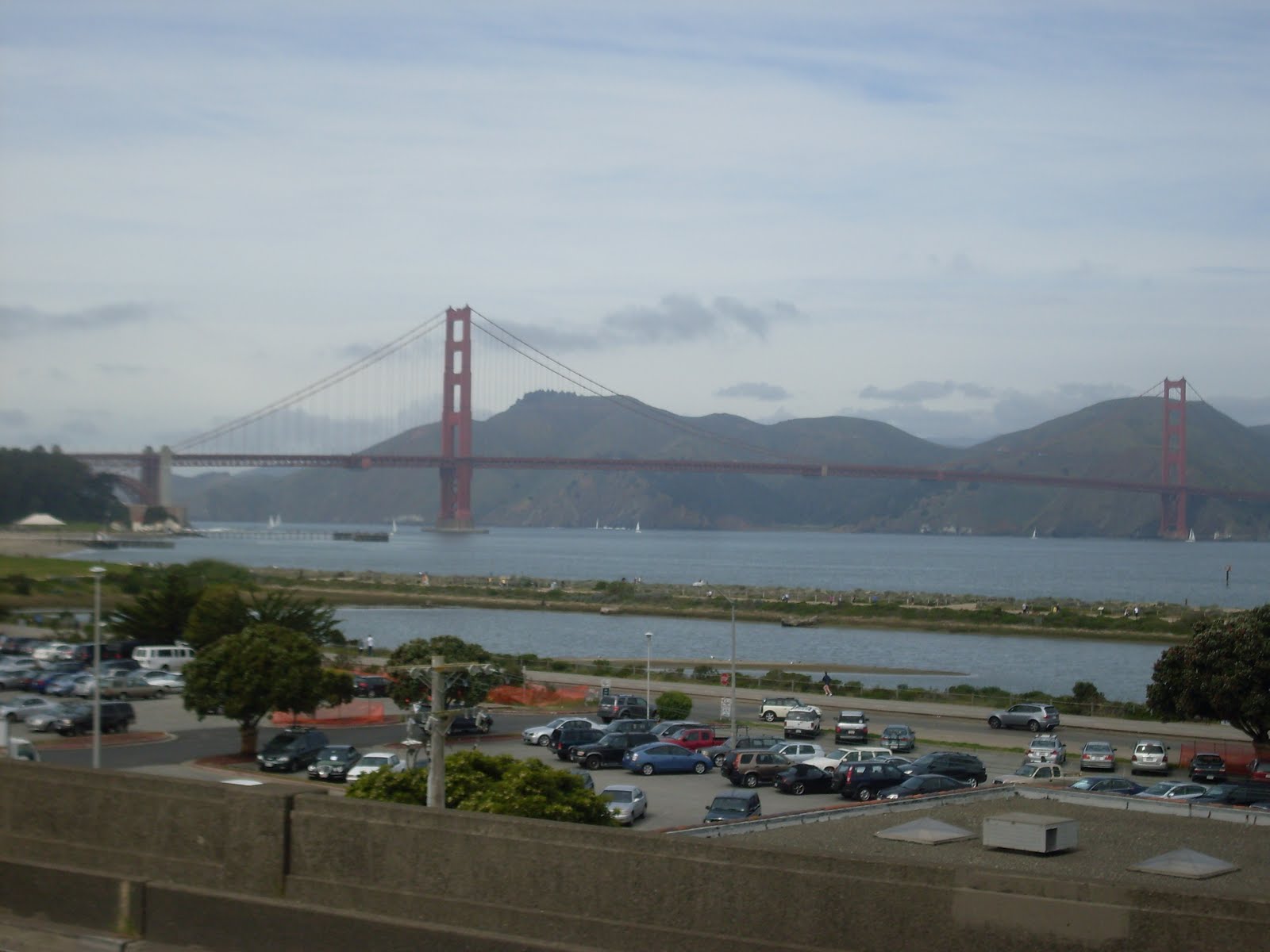
Travelog San Francisco: Protecting the Coastal Bay
It seems the gentleman mentioned at the bottom of the sign is responsible for Protecting the Bay, Mr. David Hayes - Project Manager.
Sometimes recognizing diversity in natural resource careers isn't so conspicuous, but it's always a great thing to discover...and share.
Happy International Beaver Day
The Beavers, Wetlands and Wildlife Organization is trying to show people how important beavers really are, and the group has produced an educational DVD and sent 1,000 copies to teachers all over the state of New York.
One member says the beaver is one of the most important wild animals for a number of reasons. First, because they build dams and prevent flooding. And second, because beavers protect us from greenhouse gas emissions.
"Beaver wetlands, like all wetlands, are the best ecosystem for storing carbon," said Sharon Brown, of Beavers, Wetlands, and Wildlife. "And if they are destroyed, carbon dioxide goes into the air and that's a dangerous greenhouse gas."
April 7 was chosen as International Beaver Day because it is the birthday of the late Dorothy Richards of Little Falls, who studied beavers for 50 years.
Understanding North American Beaver Behavior as an Aid to Management
by Bruce Schulte and Dietland Mueller-Schwarze
If you've ever notice a huge pile of sticks and branches in the water, then you can best believe you have come across a beaver dam. Another sign of beaver activity is this:

Wordless Wednesday: Urban Waterscapes (Travelog Europe)
Adventures on the High Seas with SEAPLEX
Seriously though, my BBFF (blogging best friend forever), Miriam G is headed out into the great vastness of the Pacific Ocean and leading her crew aboard the SEAPLEX - Scripps Environmental Accumulation of Plastic Expedition. Their mission… “Seeking the Science of the Pacific Ocean Garbage Patch”.
“From August 2-21, a group of doctoral students and research volunteers from Scripps Institution of Oceanography at UC San Diego will embark on an expedition aboard the Scripps research vessel New Horizon to explore the problem of plastic in the North Pacific Gyre. The Scripps Environmental Accumulation of Plastic Expedition (SEAPLEX) is the first of its kind and will focus on a suite of critical questions. How much plastic is accumulating, how is it distributed, and how is it affecting ocean life? The researchers hope to provide critical, timely data to policy makers and combine Scripps' long tradition of Pacific exploration with focus on a new and pressing environmental problem.”
Photo: Scripps Institution of Oceanography research vessel New Horizon off San Diego on May 6, 2009.Doesn’t this sound like the most exciting research ever? I think so. This type of research is not only interested in whole communities –t he plants, animals, and microbes of the sea – but also the entire ecosystem – marine – and how we humans and our activities influence the marine ecosystem and its communities. Have you ever thought about what happens with all of our plastic trash we discard? What about those plastic bags from the grocery store? There always seems to be bags floating in the air, sailing across the ground…and where does it end? What about plastic containers from water bottles, laundry detergent, juice or other food items? Unlike paper or fiber containers, plastic doesn’t obey the ‘rules of decomposition’. It doesn’t easily break down, so it just sits there – or floats – forever and ever. Okay, not forever, but for a time much longer than we live, and we and discard plastic like running water, so we must begin to think about managing it when we’re done with it.
Photo: NOAA Marine Debris ProgramEach day, the crew will post updates and let us all know how the weather is treating them, how the sampling goes, and what they are finding. I love how we are able to follow their progress and get a chance to observe a ‘real-life scientific expedition’ in progress. I’m looking forward to it all.
Join me in following SEAPLEX on its High Seas Adventures!
Visit and subscribe to the Blog: http://seaplexscience.com
Follow their every move and discovery at Twitter: @seaplexscience
Urban Wildlife Watch: Marine Mammals

Though many of us may not think of whales are urban wildlife, they indeed can be (There's college text book about them). Think about all of the urban areas along the northern coasts of the east and west sides of the North American continent. Sightings of whales and orkas were recorded there for a few hundred years. And think about the fishing and whaling towns in the same areas. However, this is the largest case of roadkill imagineable, but if you checked out the National Geographic special on the Blue Whale, it discussed this very problem. Much bigger ships - like cargo ships and cruise ships - are travelling along routes in the sea that intersect with the traditional swimming routes of these fantastic creatures, including threatened species like the fin whale.
At the very least, I hope we gain some important insight into the biology of the species and continue a dialogue about how we humans might successfully coexist with our beautiful wild cousins - both marine and terrestrial.
Book Review: The Poetry of Environmental Education
Title: The Seldom-Ever-Shady GladesAuthor & Illustrator: Sue Van Wassenhove
Publisher: Word Song of Boyds Mill Press
I have never experienced a book quite like this one. The illustrations of natural scenes of the Florida Everglades are actually quilts! For each poem there is a corresponding quilted illustration – of herons fishing, manatees and rays swimming in the deep blue, palm trees swaying in the wind, birds nesting, and alligators with mouths agape. She uses poems, both short and long, to portray very accurate scenes of food web dynamics, colorful biodiversity, animal courtship rituals, animal behavior, and life in the perilous Everglades. Ideal for students in grades 4-7.
I'm very taken by the art of this book. As a child I only thought of quilts as sets old heavy bed covers made scrap pieces of materials. It wasn't until I was older that I came to appreciate the artistry, craftsmanship, mathematics, and creativity of quilts. In African-American history classes I learned that many slaves and later freed slaves used quilts to tell family histories and stories of escape. I later learned about the art and craft of quilting. Quilters - whether individual or a group, would work for hours arranging scraps of cloth in precise geometric patterns to create something both beautiful and functional. So, I am really in awe by the author and illustrator of this book for creating such lovely nature scenes that are so colorful and creative. Textile art is such a beautiful way to express oneself and it uses products of nature, too. How green!
I'll be thinking about this book when I go visit the Mary Lee Bendolph, Gee's Bend Quilt Exhibit at the Missouri History Museum in St. Louis. If you live in the area or if you and your family are coming in the St. Louis area for vacation this summer you must stop by and see it. The exhibit is on display until September 13, 2009.
Book Review: Environmental Education Books
Title: The Monarch’s Progress: Poems with Wings
Author & Illustrator: Avis Harley
Publisher: Word Song of Boyds Mill Press
I thoroughly enjoyed this book of poems about Monarch Butterflies. Ms. Harley uses clever poems to explain monarch butterfly development, behavior and their impressive migration flight. At the end of the book, she elaborates on the butterfly lifecycles. I especially like the cross-disciplinary potential of the book. She uses over a dozen poetic styles that are easy to read and entertaining. It is also a great book to for literacy and language arts. Ideal for students in grades 2-5.
Title: Our Three BearsAuthor: Ron Hirschi; Photographer: Thomas D. Mangelsen
Publisher: Boyds Mills Press
Can you name the three species of bears that call North America home? They are the Black bear of the United States and Canada, the Grizzly Bear of the Pacific Northwest including Canada and Alaska, and the Polar Bear of the Arctic regions of Alaska and Canada. Our three bears – black, brown, and white – are apart of our shared national heritages. They are the largest land predators of their respective environmental systems. What I like best about this book is how the author presents a compare and contrast picture of the three bears in this photograph-rich trade book. Ideal for students in grades 3-5.

Title: Marvels in the Muck: Life in the Salt Marshes
Author: DougWechsler
Publisher: Boyds Mills Press
Wetlands are very important environmental systems that are home to beautiful waterfowl, reptiles, mammals, invertebrates, and lots of biting insects. If you live in Florida, Louisiana, or any place with “Bay” or “Gulf” in the name, then this an introductory ecology book about your home – coastal wetland communities. Each of the four chapters introduces readers to the animals, plants and climate changes of the progressing seasons. The book details food chain and web dynamics, animal behavior, bird migration, and relationship between the ocean and fresh water systems. I wish I had this book as a younger student. Ideal for students in grades 6-8.
Finally, I want to say that it is purely coincidence that I reviewed three titles published by the same company. However, I do want to say that this publisher has greatly impressed me with their ability to consistently publish quality children’s science books. I like most of their books I read for the Animal Behavior Society Outstanding Children’s Book Award.
Week of the Blue: What's next for the Blue Whale?


For example, how does import and export of goods across the ocean impact wildlife. As the show detailed, it does, but we're not sure of exactly how deep the impact is. The special also introduced many of us to cultures that consume whale meat. How does the consumption of seafood products - including fish and shrimp impact marine ecosystems.
Finally, Cathy Preston, a graduate student in marine conservation at the University of California San Diego interested in Marine Policy and Conservation. Part of her research project is about sustainable seafood practices. Sustainable seafood practices might be one of the ways to balance human and nature conflicts. Her research involves asking people about their seafood consumption and choices. She has an online survey that you can fill out and only takes a few minutes. As a fellow graduate student and scientist, I know how hard it can be to get enough data. I am asking all you, my very lovely readers to participate. Here is the link to the survey.
Thank you very much.
Week of the Blue: Feeding at Sea


Dead animals provide a valuable bulk source of nutrition to the remaining animals in the food web. Meat is a very valuable source of protein, on which the sea gulls and sharks were partaking. And had the whale sank to the ocean floor, which normally happens, a frenzy of other animals would have had the opportunity to feast as well. Though the death and location of a whale is completely random, in fact there are thousands of organisms large, small, and microscopic who greatly depend on them.
However, the dead whale from the special washed up on shore. In fact, the special showed another blue whale that had washed up on shore after death. Though sea gulls and other land animals willing and capable of feasting on the whale, it won't be handled nearly as efficiently as it would have been had the carcass remained out at sea. When a dead whale washes to shore, usually people have a hard time dealing with the sight and especially smell of the decomposing animal. In urban areas this is a big problem. As a result, teams of people come to assist. Though it was sad to see the dead baby whale (which had been born to soon from the shock of its mom's death), scientists now know more about fetal and baby blue whales.
Wordless Wednesday: Blue Oceans, Blue Skies
This is an aerial shot of Miami, Florida (USA). As one of the nation's largest cities, this coastal city is a typical urban marine ecosystem.
Florianopolis is actually an island, surrounded by beaches of the Atlantic Ocean.
A better view of the ocean.Week of the Blue kickoff: Kingdom of the Blue Whale
There is much buzz about this special, Madhu at Reconciliation Ecology and Kevin Z at Deep Sea News actually pre-screened the show. Lucky devils. But I'll be watching it tonight like most you all. Sorry for everyone who doesn't have the National Geographic Channel as apart of their cable package. That really sucks. If I knew how, I'd let you splice my line Miriam. I've been rather envious of the marine bloggers lately, and now this. Darn, they sure are cool. So I'm completely switching cafeteria tables this week and hanging out with the super-cool Marine and Ocean Bloggers this week. I'll blog about Marine Biology & Ecology this week. (Plus, you all know how much I love a theme).
It's a chance for me to practice 'academic diversity', stretch my mind and present other interesting and equally valid examples of Urban Ecology. Coastal cities, harbors, shipping towns, and fishing towns are equally urban and marine. I haven't spent much time in such areas, but what little I have experienced, I will share with you. So get ready for the Week of the Blue!
*****
The Official Show Liner
Supported by the National Geographic Society, the world's eminent blue whale scientists embark on a revolutionary mission: They'll find, identify, and tag California blue whales, use the DNA samples to confirm the sex of individual whales, then rejoin the massive creatures' stunning migration when they collect at a chimera known as the Costa Rica Dome. These experts have observed, firsthand, courtship behavior among the whales at the moving mass of krill and currents 500 miles off the coast of Costa Rica. Now, they hope to find and record the Holy Grail of blue whale science -- the breeding and calving grounds of the biggest mammals in the sea.
Come back this evening and I'll post my reaction to the program...
My quick reaction...I was GREAT. I loved how the program shared the scientific experience with the audience, the questions, the hypotheses, the methods, the waiting and getting nothing, the interpretation, and re-intepretation of results. It was great. I will get more detailed on in later posts.