This dragon fly is dead. I found it on the lawn of a friend's house, still in great condition. Dragon flies are wetland bugs. They live near water where the females lay eggs. The juvenile stage of dragon flies (and the closely related damsel fly) are called nymphs; and these little alien-looking bugs live in the water until they become mature exoskeleton-having, wing-bearing adults. You can always tell a dragon fly because of its large size and when it lands it holds its equal-sized double wings out, like the pictures above. And they come is a variety of pretty colors.
Wordless Wednesday: Dragon Fly
This dragon fly is dead. I found it on the lawn of a friend's house, still in great condition. Dragon flies are wetland bugs. They live near water where the females lay eggs. The juvenile stage of dragon flies (and the closely related damsel fly) are called nymphs; and these little alien-looking bugs live in the water until they become mature exoskeleton-having, wing-bearing adults. You can always tell a dragon fly because of its large size and when it lands it holds its equal-sized double wings out, like the pictures above. And they come is a variety of pretty colors.
Great American Backyard Campout Blends Outdoors, Family Fun and Science
So get your family and neighbors together and go camping - at a local campground, state or national park, or in your backyard. Being outdoors is a perfect time to connect to science. You can explore biology, conservation, ecology, astronomy, geology, geography, environmental science, and more.
I wrote a piece for COPUS - the Coalition of Public Understanding of Science encouraging its readers to participate in the Great American Backyard Campout and use that time to not only connect with family/neighbors but hace fun exploring science, too. Check out the blog post (link here) and read the whole list of recommended Citizen Science and Arts and Science activities recommended. Plus here's one I overlooked: Waving at the International Space Station as it orbits over your night time sky! The International Space Station is visible in the sky, assuming the weather agrees, so you could actually keep an eye out for it while you tell campfire stories and eat s'mores. Visit the website http://www.isswave.org/ for details on how to plan your wave. You can also follow them on Twitter @twisst for a tweet when it's visible from your skies.
Or if you're ready to sign up right now, then go for it. You can register your 'camp site' - your family, church or community event with the National Wildlife Federation Great American Backyard Campout website (link here). And visit my friend, Rue at Outdoor Afro for camping recommendations. If camping is still new to you it might prove helpful to get some tips to make the night stress-free adn enjoyable.
In the meantime, let me know if you plan on participating and how. And be sure to do a little exploration, too. Can't wait to hear all about your Urban Camping Science Adventures! ©
Citizen Science Spring & Summer Field Season opens
Why get involved in a citizen science project?
It's a perfect way to spend time with your family. You're always wondering what you can do that's different, will make for a great adventure and doesn't cost alot of money.
Start a fun learning project. If you're a home schooling parent, after-school teacher or camp counselor and you want the kids to have a meaning experience that will go with them forever. This is it. Just a little time once a week or once a day yields the perfect opportunity to do a big end-of-camp presentation and capstone experience.
It is so easy! Seriously, simply visit a website, sign-up for a project (and sometimes you don't have to do that), and email the results back (or fill out an online form). If you find a local project, then you show up and lend a scientist a hand and get a chance to get up close and personal with some exciting plants and animals.
Here are some Citizen Science projects you can do right now!
Basically, you adopt a special place, like your backyard, special area of your neighborhood park, your school yard, or even the empty lot along your street. You visit your special place at least once a week. Make notes in your nature journal (are you journaling? if, not it is so much fun and you should do so right now) and share your results with the online data base. The data from you and others all over the nation will be used to track any changes our natural world is making to climate changes and human influences. Go to their website to learn more and sign up. Also follow them on Facebook and Twitter.4. Shark tagging. My friend David Shiffman needs volunteers to help him with his research for school. Do you like Shark Week? Then, you're going to love being a citizen science with David. He tags (small) sharks for his research in sharking feeding behavior and ecology; and his research also helps to measure the size and health of the shark populations in the Coastal South Caroline sea. Over 30 different species of sharks call that coast home. It's very interesting work and definitely will give you something to talk about at parties forever. You can learn more about his research here and follow his blog about sharks, marine biology and conversation of the ocean and its creatures at Southern Fried Science and on Twitter @WhySharksMatter.
DNLee
demystifying nature letting everyone experience
Urban Environmentalism in Action: St. Louis North City residents sue city over recycling
Ms. Annie Cooper and Ms. Maxine Johnson, residents of North St. Louis residents are filing a discrimination suit against the city claiming their alderman, Mr. Jeffrey Boyd of the 22nd Ward, refused to provide city-ordered recycling bins because the residents in their neighborhood are "too dumb to recycle." Mr. Boyd says he never said such things; but he does admit to not making recycling bins readily available to his neighbors because saw other measures as having higher priority. To be honest, I wouldn’t be surprised if his decision to overlook placing recycling bins in his neighborhood was based on an opinion held by many that African-Americans and people from inner-city communities are not likely to be environmental advocates and his residents probably wouldn’t use them anyway. It’s not uncommon for neighborhoods like his to recycle less frequently and in smaller volumes than more affluent parts of the city. In fact, I’ve done some anecdotal observations of how often community recycling bins, the ones by the fire stations, would get filled in different neighborhoods in St. Louis. Just as a comparison, there are no fewer than 4 bins in my old neighborhood, Benton Park, which always seemed to get full rather quickly. However, in Old North St. Louis, where I worked and very near Mr. Boyd’s ward, there were only 2 and they seemed to be empty most of the time.
![]() |
| Ms. Johnson and Ms. Cooper claim their neighborhood did not receive alley recycling bins like these. (image courtesy of Threshold Properties blog) |
• engage his neighbors and help them understand why responsible trash removal is important to their health, well-being, property value, etc,
• raise awareness about the problem of filling up landfills, running out of natural resources, and illegal dumping,
• work with citizens to help them dispose of trash via ways that reduce environmental impact that are affordable, feasible and convenient,
• coordinate neighborhood cleanup efforts that give citizens a sense of pride and ownership in a clean, healthy community, and
• empower citizens to educate other residents in responsible trash removal and reporting illegal dumping activities.
Though it is often assumed that Black people and people from less-affluent neighbors aren’t interested in recycling and have more important things to worry about, that doesn’t seem to hold true for this neighborhood. Actually, I am quite energized by Ms. Cooper’s and Ms. Johnson’s actions; and I am proud of them, too! Far too often attention is placed on the lack of interest of people from urban, primarily minority, working-class neighborhoods to participate in environmental initiatives. This is a strong example of how people of color are as invested in environmental issues as well-to-do, mostly white citizens. It’s also a great example of citizens who have been traditionally marginalized, speaking up and demanding to be taken seriously on a very public issue. I think when citizens speak up, it behooves elected officials to listen and work with them. Especially in a situation that can be easily addressed like this one.
So, call me Alderman Boyd. I think I could help you out.
Urban Wildlife Watch: How to Find Signs of Animals in City Parks (Guest Post)
"Living in the Northwest I get a lot of chances to see animals in and out of the city."
A city park does not need to be just for taking a casual stroll. Instead, it can be a learning opportunity for anyone that wishes to discover more about the animals that may be residing in an area. While finding animals in your local park may sound challenging, the truth is that you don’t need to have an online biology degree or even an encyclopedic knowledge of animals to do so. In fact, you can find wildlife almost anywhere by simply knowing how to look for their nests, dens or other areas that they may inhabit.
Undoubtedly, there are some animals that are going to be found no matter where you go. For example, squirrels are a common animal that can be found in most national parks, city parks, and even some back yards. Yet when paying a visit to your local park you are also likely to come across some less common animals as well, such as owls, ducks, geese and maybe even swans. These animals will especially be present in parks where visitors frequently put out food for wildlife or there is an abundance of open water.
The best way to spot a squirrel is to look very hard. These animals blend in with their surroundings very well. In fact, you might want to look for their nest first, which is about the size of a football and comprised of twigs, grass and bark. Many times these nests will be in between the branches of trees or sometimes in a hole inside the tree. Keep in mind that these nests are going to be more dominant in areas where there are many trees.
![]() |
| Squirrel Nest. Photo by Rodd Dierker. |
If there is some form of water in your park or if people frequently feed the wildlife there, there is a good chance ducks and geese will be at hand. One sign people can use to determine if there are indeed waterfowl in the area is the presence of a nest. These nests will usually be along the path of water or sometimes in the middle of a cluster of weeds. Most of the time the animal is hid from view among all the weeds so people may actually be stepping over them and not even realizing that they are there. The same can also be said for swans. However these birds usually prefer to have their nest right on the water and hardly ever venture far from their home.
Overall, a city park can be a great place to find wildlife. Squirrels, owls and waterfowl are just a few of the animals you can expect to find in your local park. Better yet, if the area was once home to wilderness, you may even encounter foxes, raccoons, ground squirrels or even coyotes.
That ws a fantastic post about spotting animals and animal signs in your backyard. Also check out Urban Wildlife Watch: Squirrels and Dreys. Thanks Ashley for sharing your own Urban Science Adventures! ©. I hope more of you feel excited about sharing your own stories of urban science exploration.
Wordless Wednesday: Water Quality
I'll be at Spring Valley Park in Kansas City, Mo leading water quality monitoring activities with the families that come to the Kids Fishing Derby for Urban Outdoor Day presented by Urban American Outdoors and Kansas City Missouri Parks & Rec. I hope people see the obvious connection between the activity - fishing - and the importance of maintaining healthy waters for wildlife and future outdoor recreational activities. I also hope they make the next obvious connecton to their own daily habits and how that might relate to water quality.
Water Quality can be monitored in two different ways: abiotic monitoring and biotic monitoring.
Abiotic monitoring involves measuring the important physical parts of the water environment such as
- the pH of the water: how acid or basic it is
- the amount of dissovled oxygen in the water
- turbidity: how clear or cloudy the water is
- temperature: how warm or cool the water is
| Macroinvertebrates are very good indicators as to the health of a stream, lake, or pond |
| The presence of many different species and other predatory invertebrates is a good sign that the water habitat can support many food chain levels. |
| Healthy fish species are also a good sign. Remember, vertebrate species like fish and birds ultimately depend on invertebrate, microbe, and plant species for their survival, too. |
Blog Book Review: Jack in the Box presents Science Kids Mini-books
I gobbled my right size burger with the right amount of ketchup and mustard and right size fries and soda. I then automatically grabbed the toy and prepared to just toss it on the back seat. But this was no ordinary kiddie meal toy. It wasn't a toy at all, it was book, a science book, just for kids.
This is the book I have.
Title: Animal Homes
Author: Angela Wilkes
Publisher: Kingfisher
It's a book that explains a very important concept in ecology - habitats. I love how the author explains why animals need homes, how different animals build and use homes, and the different places animals build homes - trees, under ground, and in the water. It is a trade book for sure, but only 7 x 5.5 " it fits perfectly in smaller hands. The bright bold photographs of birds, fish, mammals, insects, rodents, and more in the their homes illustrate the importance of homes - or habitats - to our wild neighbors. Plus, it is just the right amount of text for young readers. Along the footer of each page are definitions of some of the more complex words used in book I recommend for pre-K-grade 1 students. And my absolute favorite part of the book...Activity suggestions! Yes, Jack encourages the youngsters to 'investigate the world of science' and offers simple instructions, using upcycled materials, to watch their wild neighbors.
Synopsis from Jack in the Box Kids Toys website.
ANIMAL HOMES
In this book about animal homes, you'll discover an ant colony, learn about animals in mobile homes and take a look at how some animals live underground. More fun included with hands-on projects for you to do.
Okay, Jack. I didn't realize you loved sharing science and encouraging the citizen science in your younger patrons, like me. But now that I know, expect a call from me. I see us doing great science outreach together in your urban markets.
Dr. DNLee, at your service!
demystifing nature, letting everyone experience.
Preparing for summer camp
And I'm very happy to annouce I have secured a fantastic summer position as the supervisor of a local Urban Nature Summer camp program. (Yes, the same one I did last year).
I'm working behind the scenes: interviewing hopeful Outdoor Instructors, calling facilities, making arrangements for the program. I'm also assembling the handbook of activities. We have a notebook full of classic raccoon circle activities that are always a hit and I've come across some new gems related to the same ideas. I just had to share these with you. I want everyone to appreciate how much the outdoors can be (and how much fun learning about ecology is, too.)
Thinks of these links as activity guides for any children you may have this summer (camp counselor, family reunions, scouting trips, babysitting, anything)
101 Nature Activities from Sanborn Western Camps
Environmental Education Activities & Games
100 + Things You Can Do Outside! - recommended by me
I'm so looking forward to working this summer.
And the Adventures continue...online. I have created an Urban Science Adventures! © Facebook Fan Page. Now you can share your pictures and stories all year long with other urban nature and environmental education enthusiasts.
Diversity in Science Carnival # 9: All Shades of Green is up
With April being the month we celebrate Earth Day, Arbor Day, and Environmental Education what better way to celebrate these Green activities than to celebrate the people who make Green happen.
Diversity in Science Carnival #9 - All Shades of Green.
Dianne Glave of Rooted in the Earth - a blog about Reclaiming the African American Environmental Heritage, hosted her very first carnival. And I love her take on the theme - A 'Scratch-n-Sniff' Blog Carnival: "What does April (spring) smell like to you?" Each submitter shares his/her story and blog post.
It's great. Check it out and please leave a comment at each author's page.
Plus, be sure to join us for Diversity in Science Carnival #10: Shattering Stereotypes in STEM, hosted at Quiche Moraine. We are inviting all posts that challege pre-conceptions and mis-conceptions of who scientists/engineers are, what they look like, how they behave, what they do, etc. A cross-disciplinary examination of this issue is encourged and posts about everything from the merging of art and science or science and faith, to posts that highlight social life to how people from well-represented groups are strong advocates of diversity initiatives.
Submission deadline May 25. Carnival will post May 27.
Submit via this link.
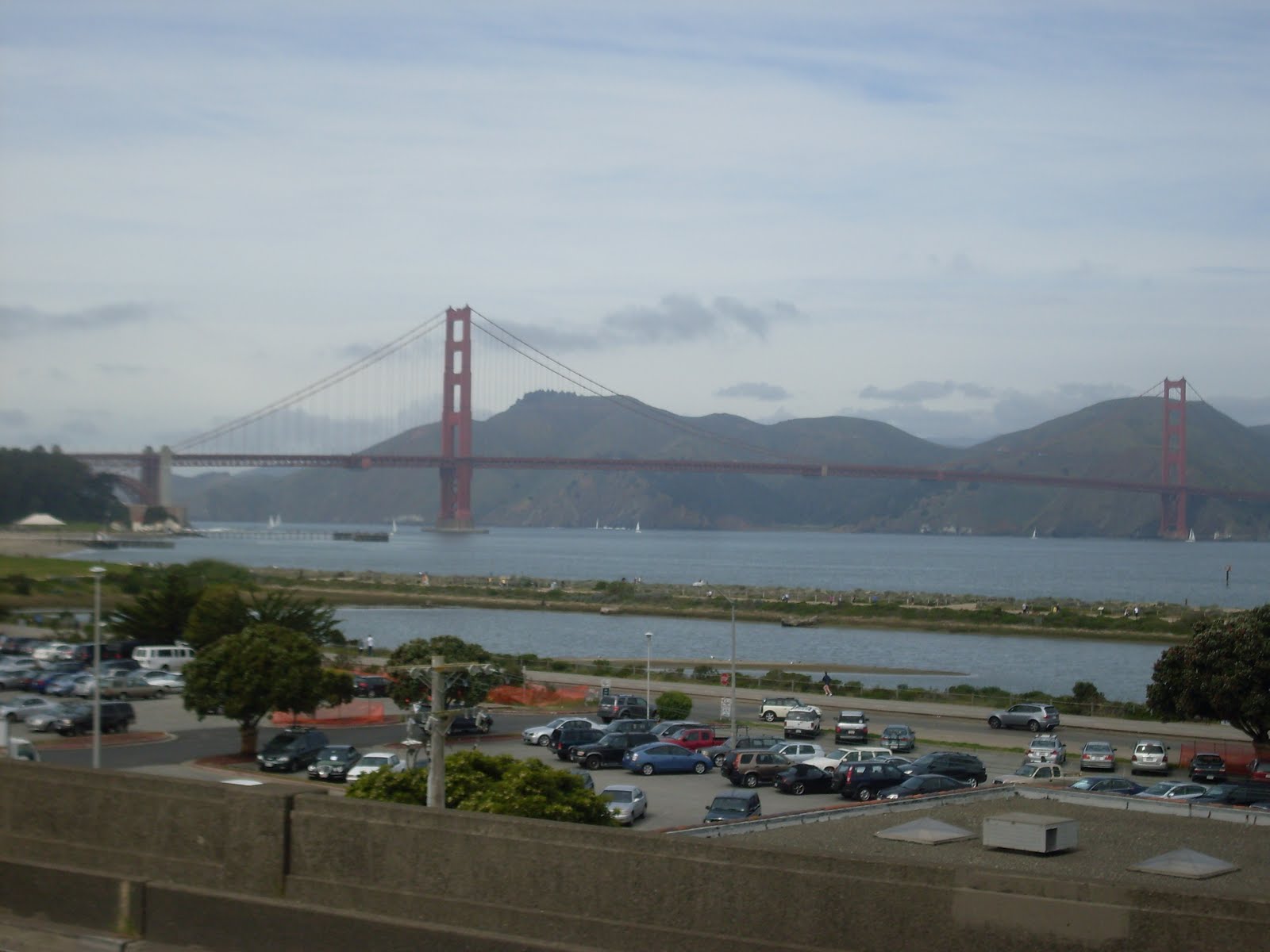
Travelog San Francisco: Protecting the Coastal Bay
It seems the gentleman mentioned at the bottom of the sign is responsible for Protecting the Bay, Mr. David Hayes - Project Manager.
Sometimes recognizing diversity in natural resource careers isn't so conspicuous, but it's always a great thing to discover...and share.
Happy Earth Day 2010
I'm headed to Murray State University (in Kentucky). I've giving my first ever seminar talk. College science departments often have weekly or monthly speakers come and talk about their research. As a grad student, it's a regular thing to see and hear professors from all over the region or nation come and talk about the papers we may be reading. Undergraduates sometimes attend. But as a newly minted PhD this is a big deal to meal. It's like a debutante ball! I'll be giving a talk about my dissertation research - a reacap of my defense talk I gave a little more than a month ago. Plus, I hope to make some great connections.
Yay, for science!
As usual, thanks for your well wishes and support. Everything you contribute helps fund these little science adventures. In this case, gas money to Murray, Kentucky.
Thanks,
DNLee
demystifying nature, letting everyone experience.
Happy International Beaver Day
The Beavers, Wetlands and Wildlife Organization is trying to show people how important beavers really are, and the group has produced an educational DVD and sent 1,000 copies to teachers all over the state of New York.
One member says the beaver is one of the most important wild animals for a number of reasons. First, because they build dams and prevent flooding. And second, because beavers protect us from greenhouse gas emissions.
"Beaver wetlands, like all wetlands, are the best ecosystem for storing carbon," said Sharon Brown, of Beavers, Wetlands, and Wildlife. "And if they are destroyed, carbon dioxide goes into the air and that's a dangerous greenhouse gas."
April 7 was chosen as International Beaver Day because it is the birthday of the late Dorothy Richards of Little Falls, who studied beavers for 50 years.
Understanding North American Beaver Behavior as an Aid to Management
by Bruce Schulte and Dietland Mueller-Schwarze
If you've ever notice a huge pile of sticks and branches in the water, then you can best believe you have come across a beaver dam. Another sign of beaver activity is this:

Guide to Urban Ecology
It was my very first time speaking to a general audience group on request. It was also the first time I gave my Urban Science Adventures! © schpeel to a live audience. The 7th graders from the St. Louis Public Schools were great. They were attentive and asked lots of questions. Great questions. And they offered several of their own Urban Science Adventures! © stories. Many of the kids had their own sightings of urban wildlife including opossums (both roadkill and alive), rabbits, squirrels, and hawks. One student even saw a porcupine once! I'm jealous. I'm a mammalogist and I've never seen a porcupine!
I presented a short presentation that included photos of urban wildlife scences I've captured right here in St. Louis. The kids were really fascinated by by my hands....not really. But I had 2 classrooms of all boys who were impressed that I was holding a frog, a bird and stood close enough to various types of bugs to photograph them. I capped things off by encouraging them to explore and discover nature in urban areas.
I think shooting local scenes was important. A couple of kids knew this spot exactly.
I love outreach. I really do. It was a blast. I'll be traveling this semester - searching for jobs, attending meetings, connecting with fellow bloggers (science/nature/blogging while brown) and outdoor enthusiasts. I've booked one date already to give a formal talk (the dissertation presentation talk). I'm willing to do travel and do some two-fer presentations - the official science talk and the science outreach presentation.
Also, check out my KETC Science Matters video and let me know what you think.Thanks everyone for the support and encouragement.
DNLee
Demystifying nature, letting everyone experience
Planting seeds of science interests in kids of all ages
Fostering science, math, and engineering interests in young people is the goal of several organizations, including many of our nation’s publicly funded agencies like NASA and NSF. Informal science education programs and institutions run the range. Some supplement traditional K-12 education lessons. Some provide opportunities for families to spend time together, learning, exploring, and having fun. And still there are some that specifically target under-served audiences to introduce them to pioneers and exciting career opportunities.
STEM Outreach Programs that rock!
2009 was definitely the year science initiatives! It was hailed as
* The Year of Science – with each month focusing on a different science topic;
* The Year of the Gorilla – to raise awareness of the threat of extinction to this beautiful primate;
* The Year of Darwin – to celebrate the 200th year of Charles Darwin’s birth and 150th anniversary of the publication of his book; and
* The Year of Astronomy – to celebrate one of the oldest fields of science
To help spread the word of these science initiatives, Science Cafes really took off, especially here in the United States. Often hosted at fun meeting places like restaurants where pizza and beverages are served, people can meet local scientists and learn about interesting topics. Since local communities organize these events, the topics might be related to science initiatives or any other hot topic in the news like sports, herbal medicine, love or health.But my absolute favorite science outreach efforts are the hands-on organically-grown science and nature outreach programs in individual communities. Here in St. Louis, Missouri, I’ve been involved in a few. My most recent experience was this past summer in the Forest Park Summer Youth Program with Boys & Girls Club kids.
Ocean Discovery Institute of San Diego, California, (formerly Aquatic Adventures) is an awesome program! Diverse young people from this very urban community are engaged in science exploration marine research, and environmental conservation education. This happens to be one of my dream jobs.
Plus, the 2010 San Diego Science Festival sounds like it will be the most anticipated science showcase of greater San Diego. Offering a wide variety of programs and events inspire all ages, “with a special focus on building a pipeline of future scientists and STEM thought-leaders” – festivities include supplemental K-12 Programs, Scientist Speakers series at local schools, a science Exposition, and Scientists in Residence Program. College student scientists represented from disciplines such as Biomedicine, Pharmacology, Engineering, Green Technology, Oceanography, and Astrophysics will work in partnership with San Diego county schools for 6 weeks and create joint project that will be showcased in the 2010 Festival.

I recently discovered ME4E – Multidisciplinary Education for the Environment – also out of the Chicago, Illinois. This organization provides outdoor hands-on activities for schools, scouts, and public groups to learn more about ecology and local wildlife. They seem to have a full calendar of events such as bird counts, wildlife watching, making cast of animal tracks, wetlands and woodlands lesson plans, and urban gardening programs.
The Harris Foundation Summer Science Camp is a free, academic program offered in over 20 different cities in the United Sates. Middle school students participate in a variety of recreational, social, and STEM educational activities at local college campuses. Founded by Dr. Bernard Harris, it is designed to support historically underserved and underrepresented students with limited opportunities.
Finally, no matter where you live, here is a program for any student in 3rd- 6th grade. Pulse of the Planet Kid’s Science Challenge is a nationwide competition for kids to submit experiments and problems for REAL scientists and engineers to solve. The website is also a fun place to play science games, watch videos, and enter to win awesome prizes and trips! Plus, the site also offers educator resources for teachers and parents, such as pod casts and downloadable curricula.National Public Lands Day & Environmental Education
1. They are owned by everyone and no one. Each citizen has a stake in its health but no one person can claim it for his or her own.
2. They are managed by our civil servants, such as local, state or federal employees
3. They are home to many wild creatures including threatened and endangered plant, animal, and bug species.
4. We are all responsible, individually and collectively for taking care of this land and its wildlife by not littering or removing necessary items from it.
5. These are special places that should be around for generations of ALL Americans and visitors to enjoy.
National Public Lands day is celebrated in nearly every community with a large public service event. The event keeps the promise of the Civilian Conservation Corps, the "tree army" that worked from 1933-1942 to preserve and protect America's natural heritage.
This annual event:
Then Sunday evening be sure to tune into PBS' debut of Ken Burns Film The National Parks: America's Best Idea
___________________________
Enter the NPLD Photo and Video Contest 2009 or the Robert Bateman Get to Know Contest.
It is a contest to encourage young people, ages 18 and younger to get venture outdoors and get o know their wild neighbors. Sound familiar? Additional online sources:
Association of Partners for Public Lands: Engaging the public in caring for our nation's natural and cultural resources
Land Trust Alliance: Together, conserving the places you love


Making Breakthroughs and Breaking the Color Barriers in the Great Outdoors
I’m busy, busy, busy like a bee. I have been busy writing. Writing is a necessary part of science. I know my dissertation meter has moved in a while. It doesn’t mean I haven’t been writing. It’s just that I am reluctant to count a word until I feel that what I have written is perfect. Perfectly worded and perfectly placed.
But I’ve been feeling like I need to claim my words, all of them – even the imperfectly worded and placed ones. So my word meter reflects those words. I expect that I will lose many of those words – to revisions, and re-drafts. I also think that my final dissertation word count might actually be less than 40,000 words (10,000 words per chapter).
I now claim 28, 981 words!
I feel gravid – productive, full of promise and excitement.
Breaking the Color Barrier in the Great American Outdoors
My spirits have been quite high lately. I’ve made new online friends and discovered new websites and blogs. I feel excited to be apart of a community, a movement of people who care about increasing diversity in outdoor experiences.

Not long ago I learned about a fantastic upcoming conference - Breaking the Color Barrier in the Great Outdoors. It meets next week - September 23-26 in Atlanta, Georgia, and will feature a host of great speakers including some people I am big fan of: Majora Carter
Dudley Edmundson
Dr. Carolyn Finney
It's a conference of educators, environmental activists, outdoor recreationists, and nature enthusiasts that focuses on how members of diverse communities (people of color) participate in these activities and examines reasons/strategies for getting more people of color outdoors enjoying nature. Isn’t that right up my alley? See the CNN interview with conference organizer, Audrey Peterman: Aiming to add more diversity under America's blue skies - CNN.com
I've met some people online who are also involved in this barrier breaking, too.
Wayne Hubbard, host and producer of Urban American Outdoors (Kansas City, Kansas)
Kellen Marshall-Gillespie, fellow Ecology Ph.D. Student at the University of Illinois-Chicago and owner of Roots and Shoots Organic Gardening
Rue Mapp, founder of Outdoor Afro (Albany, California)
Even though I won’t be attending the conference (and I am so tempted to just go anyway), I really need to stay close to home and finish writing. I’ll catch up with all of those great people sooner or later.
In the meantime, I’ll be sporting my swag (thanks Rue, cause I sport the the Afro outdoors all of the time. hahaha)
and breaking down color barriers in the great outdoors my own way….By trying to win this contest to Antarctica!!! So, please continue to support me. Please vote and pelase spread the word.Travelog Europe: Green Transportation
Is Biking Easier In New York? Ask The Bike Snob by Jo Ella Straley
I thought in line with my own and this blog's committment of Environmental Education and Awareness, and my theme of comparing and contrasting European and North American Urban Ecology, I am going to discuss Green Transportation.
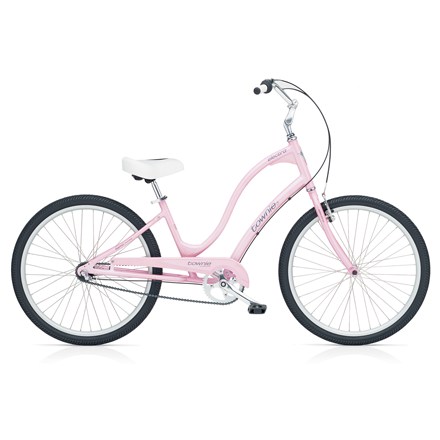
Though I own a bike (a pretty cool one at that), I will admit to being slow when it comes to using it as my primary source of transportation. Why? Laziness. I'm not in good enough of shape to bike to my destination in a decent amount of time and still be energized enough to get my business done. Capacity. Motorized vehicles have better capacity to help me take care of errands while I am out - shopping, picking up something, picking up someone, etc.
But while in Europe, and most notably in the Netherlands, bikes where EVERYWHERE. Thousands of bikes parked in lots at the train station, at bus stations, the plazas, shopping areas. Everywhere. Most of the street traffic was of bikes and some places had dedicated bike lanes - for each direction of traffic. Not only was I impressed with the infrastructure dedicated to cycle traffic - lots, bike rails, and roads - I was most impressed with how my two main biking concerns were non-issues for the Dutch.
1. Laziness. People still seemed to get to wherever they needed to be in a reasonable amount of time using bikes. Plus, most people were in good shape - not alot of heavy people there. Nor were they thin and sickly, just in shape...and no one seemed to complain. Biking, walking, and the train were just very common ways of getting about town and the region.
2. Capacity. Much like a carpool, groups of people biked together - keeping each other company, conversing and travelling. Plus, most bikes had a cargo bench on the back and/or baskets in the front. People carried parcels, packages, and books in them. I also observed quite a few people riding shot gun. It may look easy, but it ain't. That's some serious core muscles being used to maintain your balance...and many people were not holding on to the driver.
I mean young and old alike were just chilling on the cargo bench. Moreover, cycling did not prohibit families from traveling together. It was not at all uncommon to see parents with babies and toddlers strapped into special seats at the handle bars or right behind the parent, which is another feat of strength. Sometimes children rode their bikes along side parents and siblings. But my favorite was the cargo bike, complete with belts for securing young ones.
(See the photo slide show at the end of the post.)
The NPR story - listen to the audio or read the transcript - reports that commuter cycling is growing in popularity and use in New York City. That's good. As New York goes, so does the rest of the nation, and I'm very proud of my region and it's bicycling advocacy programs. (Trailnet, St. Louis Regional Bicycle Federation). However, the story does make it very clear there are some cultural attitudes of Americans that makes us very distinct from our European counterparts.
1. Cycling is still largely regarded as a recreational activity. The movement for cycle-friendly streets and highways will have to overcome this perception before we will truly adopt cycling as utilitarian. And it is. It is a practical form of transportation - cheap, even with all of the bells, whistles, and safety gear. Maintenance is minimal and more cost-effective than an auto and no vehicle insurance is needed.
2. Bike theft is real problem, but not taken seriously the authorities. Having one's bike and gear stolen is a major financial burden, particularly for working-class urbanites who could really benefit the most from bike transportation. In the Netherlands, bikes were everywhere. People still locked their bikes, but there was no overwhelming concerns about theft. In fact, I noticed many bikes just parked on sidewalks not secured to a bike rack or post. At first I thought these bikes were unsecured, but in actuality they were self-locked, with a device sort of like the Club. It locks on the back wheel and prevents the wheel from spinning. Neat.
3. People are concerned about getting sweaty or getting stinky when they ride to work. I co-sign this concern. However, while I was in Europe, this concern didn't cross my mind. The Dutch biked everywhere and I don't remember my nose being assaulted. So, I think that is good news.
Finally, I noted that the auomoblile culture of Europe was greener than ours, too. Motorbikes and scooters, as well as fuel-efficient sub-compacts were common. Plus, I noted this sign for electric car recharging station in Paris near the Arc de Triomphe.
Adventures on the High Seas with SEAPLEX
Seriously though, my BBFF (blogging best friend forever), Miriam G is headed out into the great vastness of the Pacific Ocean and leading her crew aboard the SEAPLEX - Scripps Environmental Accumulation of Plastic Expedition. Their mission… “Seeking the Science of the Pacific Ocean Garbage Patch”.
“From August 2-21, a group of doctoral students and research volunteers from Scripps Institution of Oceanography at UC San Diego will embark on an expedition aboard the Scripps research vessel New Horizon to explore the problem of plastic in the North Pacific Gyre. The Scripps Environmental Accumulation of Plastic Expedition (SEAPLEX) is the first of its kind and will focus on a suite of critical questions. How much plastic is accumulating, how is it distributed, and how is it affecting ocean life? The researchers hope to provide critical, timely data to policy makers and combine Scripps' long tradition of Pacific exploration with focus on a new and pressing environmental problem.”
Photo: Scripps Institution of Oceanography research vessel New Horizon off San Diego on May 6, 2009.Doesn’t this sound like the most exciting research ever? I think so. This type of research is not only interested in whole communities –t he plants, animals, and microbes of the sea – but also the entire ecosystem – marine – and how we humans and our activities influence the marine ecosystem and its communities. Have you ever thought about what happens with all of our plastic trash we discard? What about those plastic bags from the grocery store? There always seems to be bags floating in the air, sailing across the ground…and where does it end? What about plastic containers from water bottles, laundry detergent, juice or other food items? Unlike paper or fiber containers, plastic doesn’t obey the ‘rules of decomposition’. It doesn’t easily break down, so it just sits there – or floats – forever and ever. Okay, not forever, but for a time much longer than we live, and we and discard plastic like running water, so we must begin to think about managing it when we’re done with it.
Photo: NOAA Marine Debris ProgramEach day, the crew will post updates and let us all know how the weather is treating them, how the sampling goes, and what they are finding. I love how we are able to follow their progress and get a chance to observe a ‘real-life scientific expedition’ in progress. I’m looking forward to it all.
Join me in following SEAPLEX on its High Seas Adventures!
Visit and subscribe to the Blog: http://seaplexscience.com
Follow their every move and discovery at Twitter: @seaplexscience