Pages

Showing posts with label active galaxies. Show all posts

Triple active galactic nucleus

Black hole threesome revealed
(Science News) Andy Warhol reportedly said, “One’s company, two’s a crowd and three’s a party.” New data reveal one heck of a black hole party, a U.S. team of researchers reports online April 19 at arXiv.org. Three supermassive black holes — humungous gravity sinks that may form the cores of galaxies — and the stars around them could be crunching together to form a single galaxy, the group says. The first two galaxies should join up in 8 million years, with the third coming in about 32 million years after that. While scientists suspect that many galaxies have formed from such pile-ons, only one other possible triplet has been discovered so far. —Daniel Strain


Cosmic Train Wreck by Massive Black Holes: Discovery of a kpc-Scale Triple Active Galactic Nucleus
Read More >>

What activates a supermassive black hole?

There's good evidence that massive black holes exist at the centers of most large galaxies having a central bulge, and even within galaxies that lack a central bulge, are small, or have an irregular form. Such black holes can range in size up to more than 10 billion solar masses (M⊙). Little is known about what the average or typical mass of a central black hole is, although most are probably a lot smaller, such as that of Sagittarius A* in our galaxy, which is only ~4.2×10⁶ M⊙.

Four million solar masses is still pretty hefty, so such objects are usually called supermassive black holes (SMBHs), as opposed to black holes that form as supernova remnants and are only at most a few M⊙. It's not known exactly how SMBHs form and evolve. One clue is that most seem to reside in non-dwarf galaxies with a regular shape and a noticeable central bulge. This suggests that SMBHs form and evolve in tandem with the bulge. However, there are exceptions, such as one discussed here: Supermassive black hole in a dwarf galaxy. Another survey of small (under 1010 M⊙) inactive galaxies in the Virgo cluster found that at least 24% had an X-ray-emitting SMBH.

Since a black hole emits little or no radiation directly, even SMBHs are difficult to detect at distances of millions of light years, unless they are surrounded by a substantial amount of gas and dust that is heated enough in the process of falling into the SMBH that it can strongly emit radiation on its own or produce other detectable effects, like jets. Objects that fall in this category are active galactic nuclei (AGN). In most cases only SMBHs that are active as AGNs are readily detectable, so these are the only specimens we know much at all about.

I've discussed AGN a lot, most recently here, here, here, here, here.

In order to study how SMBHs form and evolve we pretty much have to rely on studies of AGNs, which can provide many clues about this issue. Unfortunately, we don't know much about what causes a relatively quiescent SMBH to become active and turn into an AGN. It's this latter question that's addressed, indirectly, by the research to be discussed here.

But first let's back up to SMBHs in general. There are several interrelated questions concerning their origin and evolution. What accounts for their formation and periods of rapid growth? Do they form before, after, or in parallel with the formation of the galaxies in which they reside? What stimulates their intense outbursts of energy as AGNs or quasars?

The most basic question is: What are the typical ways that SMBHs grow? Possible answers include merger between smaller SMBHs, slow but steady accretion of matter from the surrounding galaxy, or bursts of rapid accretion when substantial amounts of gas and dust are swept up by the SMBH.

Each of these questions, among others, stimulates intense debates among astrophysicists who study such things. These questions are interesting and important not just for their own sake. Since there is a lot of evidence that the evolution of a galaxy and of its central SMBH occur in tandem, understanding the evolution of the SMBH helps us understand that of the whole galaxy.

The research we're concerned with here was designed to study the question by surveying a large number of galaxies that can be examined in some detail because they are not too distant. In this case, that means having a redshift z≤1. That corresponds to a distance (measured in light travel time) of about 7.7 billion light years – a little more than half the size of the visible universe. Since the research needs to examine the visible form of the object, anything farther away is too distant for even the Hubble telescope to resolve in sufficient detail. Also, at z=1 all light from the visible part of the spectrum is shifted to infrared, which Hubble's optics aren't optimized for.

An AGN produces quite energetic radiation across most of the electromagnetic spectrum. So, at least in most cases, it is a sign of the rapid burst model of growth mentioned above. This is typically just a relatively short phase in the life of the galaxy-black hole combination – on the order of a hundred million years or so. That's based on the observation that only about 1% (very roughly) of large galaxies are in this phase, over the 13.7-billion year age of the visible universe. Whether this represents the only mode of growth, or even the bulk of it, is the big unknown. And of course, if there are SMBHs that grow by modes other than rapid accretion, we won't even detect them as AGN.

The standard model of AGNs, which is pretty well accepted by the astrophysical community, is that rapid accretion of interstellar gas and dust around a SMBH is what powers the AGN's "engine". Presumably, then, the AGN goes quiet when most of the available gas and dust has been consumed. But that leaves the question of what initiates the process in the first place. Since there are still many AGNs that are active in the universe out to z=1, so that the galaxies involved have been growing for at least 5 billion years since the early days of the universe, AGNs could not have been active for their entire lives. Therefore, something happened at some point to trigger the activity we observe now.

Astrophysicists want to know what that something is. At least initially, there is much more gas and dust spread throughout the galaxy than in the center. Something has to happen to cause that matter to lose its angular momentum so it can fall into the center. One popular hypothesis has been that this process is triggered by mergers between mature galaxies of roughly equal size, as the gas and dust perturbed by the merger falls inward and is swept up by the central black holes (which might merge themselves). Up until now, there has not been a large-scale investigation of this hypothesis.

Now we have one: The bulk of the black hole growth since z~1 occurs in a secular universe: No major merger-AGN connection. (Available at the arXiv: 1009.3265v2.)

A sample of 140 AGNs was selected for examination. Another sample of 1264 inactive galaxies, carefully matched in size, distance, etc. was also selected for comparison. The only reliable indication of an ongoing merger is a visible distortion of the object's shape, so this is taken as a proxy for the occurrence of a merger. However, the galaxies observed could be undergoing "minor" mergers that don't result in visible distortion (considering how far away most selected objects are). And on the other hand, there's no way to be sure that an object's observable distortion is due to a merger. So the conservative view is that this research is looking at the correlation between galaxy activity and distortion of shape.

There are two specific questions addressed by the research: (1) How many AGN have a distorted structure that appears to be the result of a galactic merger? (2) Do AGNs show any significant difference in terms of visible distortion from otherwise comparable inactive galaxies?

The first question is about whether mergers that produce distortions are a necessary condition for an AGN. Since fewer than 15% of AGNs have visible distortion, the answer is clearly "no". The second question concerns whether a merger that produces distortion is sufficient to trigger an AGN. Since there was no significant difference between AGNs and a control set of non-AGNs in terms of frequency of visible distortion, it seems that whatever causes a distorted form (such as a merger) is not a significant cause for triggering an AGN.

Bottom line: Not only are distortion-producing mergers unnecessary for triggering an AGN, they do not even seem to be a significant cause. One way to think of it is as a visible symptom of some underlying process that might otherwise be hard to detect. (A medical example would be a cancer, whose presence might be indicated by physical symptoms or biochemical markers in the blood.) In the present case, it appears that having a distorted form isn't a symptom usually exhibited by a galaxy when an AGN is present - and in fact, it doesn't predict the presence of an AGN at all.

It is important to be able to identify reliable symptoms, because a galaxy may have an AGN that is not readily detectable directly. Many AGNs are not intense radio sources, presumably because they do not have significant jet structures. And unless we are viewing the galaxy more or less face-on, radiation at shorter wavelengths can be blocked by a thick torus of gas and dust surrounding the central engine of the AGN.

Not all important questions are answered by this study. For example, galaxy mergers that do not significantly distort galactic structure – perhaps involving the cannibalism of a small galaxy by a large one – might play an important role in triggering an AGN.

The results of this research are surprising, because they seem to rule out distortion-producing galaxy mergers as an important cause of AGNs – the previous general assumption. However, it shouldn't be concluded that galaxy collisions can never produce AGNs, let alone SMBHs. There is still the question of whether a SMBH can form "from scratch" without some sort of "seed". It could be that very large black holes formed in the very first instants after the big bang, as "primordial" black holes. (See here, for example. Further possibility for the formation of seed black holes are discussed here.)

However, a simulation study reported last year in Nature (here) showed that in the early universe, SMBHs could form directly from galaxy collisions. But conditions at that time were very different – there was much more gas around that hadn't formed into stars, and a much larger single mass of gas could accumulate without forming stars. Time permitting, as usual, I'd like to discuss this research in another post.


This post was chosen as an Editor's Selection for ResearchBlogging.org
Cisternas, M., Jahnke, K., Inskip, K., Kartaltepe, J., Koekemoer, A., Lisker, T., Robaina, A., Scodeggio, M., Sheth, K., Trump, J., Andrae, R., Miyaji, T., Lusso, E., Brusa, M., Capak, P., Cappelluti, N., Civano, F., Ilbert, O., Impey, C., Leauthaud, A., Lilly, S., Salvato, M., Scoville, N., & Taniguchi, Y. (2011).
THE BULK OF THE BLACK HOLE GROWTH SINCE Z~1 OCCURS IN A SECULAR UNIVERSE: NO MAJOR MERGER-AGN CONNECTION
The Astrophysical Journal, 726 (2) DOI: 10.1088/0004-637X/726/2/57


Further reading:
Read More >>

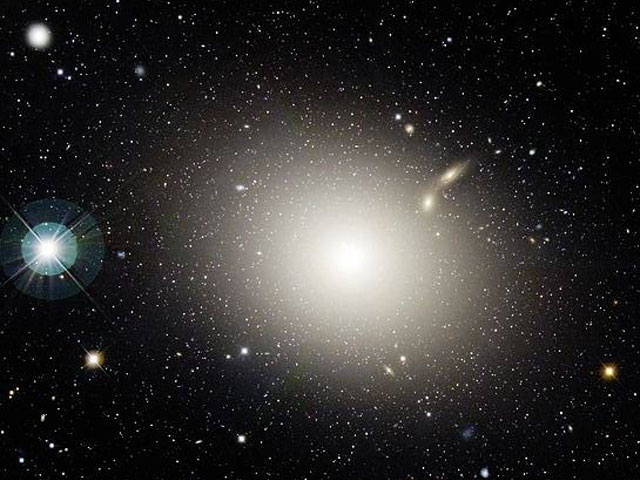
Recent research findings on M87 (NGC 4486)

M87 (Messier 87), also known as NGC 4486, is a giant elliptical galaxy, located about 53.5 million light-years away. It is noteworthy for several reasons, including the presence of an unusually large supermassive black hole (SMBH) in its active galactic nucleus, with an estimated mass of about 6.4×10⁹ times the mass of the Sun (M⊙), two plasma jets that emit strongly at radio frequencies and extend at least 5000 light-years from the SMBH (although only the jet pointed more towards us is readily detectable), and a population of about 15,000 globular clusters.

The total mass of M87 is difficult to estimate, because elliptical galaxies like M87, and unlike spiral galaxies, do not tend to follow the Tully-Fisher relation between intrinsic luminosity and total mass calculated from rotation curves – which therefore includes dark matter. Estimates of the total mass of M87, including dark matter, come in around 6×10¹² M⊙ within a radius of 150,000 light-years from the center. This compares with about 7×10¹¹ M⊙ for the Milky Way, but M87 could be more than 10 times as massive.

In other comparisons, the Milky Way has only about 160 globular clusters, and a central black hole (Sagittarius A*) with a mass of about 4.2×10⁶ M⊙. So M87's central black hole is about 1500 times as massive as the Milky Way's. Pretty impressive difference.


M87 – click for 640×480 image


Besides the recent research listed below, I've written about earlier research on M87 in these articles: Galactic black holes may be more massive than thought, Stellar birth control by supermassive black holes, Black holes in the news.

You might also be interested in some articles from the past year on the general subject of active galaxies: Active galaxies and supermassive black hole jets, Where the action is in black hole jets, Quasars in the very early universe.


Feedback under the microscope: thermodynamic structure and AGN driven shocks in M87 (6/29/10) – arXiv paper

Feedback under the microscope II: heating, gas uplift, and mixing in the nearest cluster core (3/28/10) – arXiv paper

Activity of the SMBH in M87 has a significant effect not only on the host galaxy, but also on the Virgo cluster of galaxies in which M87 is near the center. Energetic outflows of matter from near the black hole force plumes of gas out of the galaxy into the hotter intergalactic medium. The mass transported in this way represents about as much gas as is contained within 12,000 light-years of M87's center. (However, that's only about 2.5% of M87's 500,000 light-year radius.) If it had not been expelled, the gas could have formed hundreds of millions of stars.

The first paper reports on studies using the Chandra X-ray Observatory to measure gas temperatures around M87's center. The findings include detection of 2 distinct shock wave fronts about 46 thousand light-years and 10 thousand light years from the center. This indicates that explosive events occurred about 150 million and 11 million years ago, respectively.

The second paper uses observations from Chandra, XMM-Newton, and optical spectra to distinguish different phases of the hot gas surrounding M87's SMBH.

Refs:
• Galactic 'Super-Volcano' in Action (8/20/10) – Science Daily (press release)
• Galactic Supervolcano Erupts From Black Hole (8/20/10) – Wired.com
• Galactic 'Supervolcano' Seen Erupting With X-Rays (9/6/10) – Space.com

A correlation between central supermassive black holes and the globular cluster systems of early-type galaxies (8/13/10) – arXiv paper

A study of 13 galaxies, including M87, has found a correlation between the size of a galaxy's SMBH and the number of the galaxy's globular clusters. The types of galaxies studied included nine giant ellipticals (like M87), a tight spiral, and 3 galaxies intermediate in type between spiral and elliptical. The smallness of the sample is due to the exclusion of open spiral galaxies and the further limitation to cases where good estimates of the number of globular clusters and mass of the central black hole existed.

The correlation, in which the number of globular clusters is proportional to the black hole mass, is actually stronger than correlations between black hole mass and other galaxy properties previously studied for correlation, such as stellar velocity dispersion (an indicator of total mass), and luminosity of the galaxy's central bulge or whole galaxy (for ellipticals).

In some cases the correlation of black hole mass with total luminosity was especially weak, but better with number of globular clusters. For instance, Fornax A (NGC 1316) is a giant lenticular galaxy with luminosity comparable to that of M87. Yet its central black hole has a mass of 1.5×10⁸ M⊙, 2.3% that of M87's black hole. It has 1200 globular clusters, 8% of M87's count. Clearly this is not a linear relation. Rather, the study found that the best fit was a power law with M• ≈ (1.7×10⁵)×N1.08±0.04, where M• is black hole mass in units of M⊙ and N is number of globular clusters. This relation predicts a SMBH mass of 5.5×10⁹ M⊙ for M87, which is very close, and 3.6×10⁸ M⊙ for the SMBH mass of NGC 1316, which is high – but the SMBH mass of NGC 1316 is also unusually low in comparison with its luminosity and velocity dispersion.

By contrast, the relation predicts that the Milky Way with a SMBH mass of 4.2×10⁶ M⊙ should have only about 20 globular clusters, while the actual number is about 160. However, the Milky Way is a loose spiral, not one of the types that was studied, which may account for the much worse correlation. The fit is much better if only globular clusters associated with the central bulge (about 30) are considered.

The obvious question is about why this relation between SMBH mass and number of globular clusters exists. Presumably it has much to do with the typical history of a large galaxy, which is expected to include frequent mergers with other galaxies. The existence of the relationship should provide clues to galactic history, and especially how this may be different for loose spirals like the Milky Way, in comparison with more compact galaxies.

Refs:
• A correlation between central supermassive black holes and the globular cluster systems of early type galaxies (8/11/10) – The Astrophysical Journal
• Supermassive black holes reveal a surprising clue (5/25/10) – Physicsworld.com

A Displaced Supermassive Black Hole in M87 (6/16/10) – arXiv paper

It has generally been assumed that a galaxy's central SMBH is very close to the actual center of mass of the galaxy, because that is (by definition) the gravitational equilibrium point. This central point should be essentially the same as the photometric center of the galaxy, since the galaxy's stars should be distributed symmetrically around the center. Consequently, astronomers have not carefully searched for cases where a SMBH is not very near the galactic center. This lack of extensive investigation is also a result of the fact that the SMBH is often hidden inside a dense cloud of dust, so its exact position is difficult to determine. M87's SMBH (more precisely, the accretion disk around the SMBH), however, is clearly visible, and the research reported in this paper finds it is actually located about 22 light-years from the apparent galactic center.

There are various possible reasons for this much displacement from the center, and not a lot of evidence to identify the most likely reason. Possible reasons include: (1) The SMBH is part of a binary system in which the other member is not detected. (2) The SMBH could have been gravitationally perturbed by a massive object such as a globular cluster. (3) There is a significant asymmetry of the jets. (4) The SMBH has relatively recently merged with another SMBH, subsequent to an earlier merger of another galaxy with M87.

The displacement of the SMBH is in the direction opposite the visible jet, so the last two possibilities are more likely than the others. However, possibility (3) depends on the jet structure having existed at least 100 million years and the density of matter at the center of M87 being low enough to provide insufficient restoring force. Possibility (4) is viable if the SMBH is still oscillating around the center following a galactic merger within the past billion years.

Refs:
• A Displaced Supermassive Black Hole in M87 (6/9/10) – The Astrophysical Journal Letters
• Black Hole Shoved Aside, Along With 'central' Dogma (5/25/10) – Science News
• Black Hole Found in Unexpected Place (5/25/10) – Wired.com
• Supermassive black holes may frequently roam galaxy centers (5/25/10) – Physog.com (press release)
• Bizarre Behavior of Two Giant Black Holes Surprises Scientists (5/25/10) – Space.com
• Galactic Black Holes Can Migrate or Quickly Awaken from Quiescence (5/26/10) – Scientific American


M87 jet


Radio Imaging of the Very-High-Energy γ-Ray Emission Region in the Central Engine of a Radio Galaxy (7/24/09) – Science

Energetic plasma jets, in which matter is accelerated close to the speed of light, combined with intense electromagnetic emissions, especially at radio frequencies, are prominent in about 10% of active galaxies, including M87. However, little has been well established about what processes are responsible for the emissions, or more generally how the jets are powered, accelerated, and focused into narrow beams. Because of the relative proximity of M87 and the fact that the jet we observe is angled from 15° to 25° to our line of sight, M87 is one of the best objects to study in order to learn more about how jets work.

Gamma rays, because of their very high energies (greater than 100 keV per photon), are not continuously produced in active galaxy jets, but are occasionally observed in short bursts lasting only a few days. One such event occurred in M87 in February 2008. At the same time, the intensity of radiation at all other wavelengths increased substantially. Such flares, at lower energies, are not unusual, since the energy output of most jets is somewhat variable in time. The flare persisted for much longer at energies below the gamma-ray band, indicating that the disturbance continued to propagate along the jet even after the gamma-ray flare subsided. However, although we don't know what the cause was, the coincidence in time of the gamma-ray emissions and the beginning of the extended flare makes it very likely that the events had the same source.

This is significant information, because our technology for detecting gamma-ray events has very poor angular resolution (~0.1°), since gamma rays can be detected on the ground only by secondary effects that a gamma ray produces in our upper atmosphere. More than 6 orders of magnitude finer resolution can be achieved at radio frequencies, using very long baseline interferometry. With that technology, it was possible to locate the origin of the disturbance that caused both gamma ray and lower energy flaring to a region within about 100 Schwarzschild radii (Rs) of the SMBH. Since Rs = 2G×M•/c2, Rs for the M87 SMBH is about 1.9×10¹⁰ km, or more than twice the radius of the solar system. So 100Rs is about 70 light-days – which is pretty small compared to the 53.5 million light-year distance to M87.

It's also significant that the gamma-ray event occurred so close to the SMBH, because the cause must be unlike whatever is responsible for the flaring described in the following research.

Refs:
• VLBA locates superenergetic bursts near giant black hole (7/2/09) – Physorg.com (press release)
• Mysterious Light Originates Near A Galaxy's Black Hole (7/2/09) – Space.com
• A Flare for Acceleration (7/24/09) – Science
• High Energy Galactic Particle Accelerator Located (9/14/09) – Science Daily (press release)

Hubble Space Telescope observations of an extraordinary flare in the M87 jet (4/22/09) – arXiv paper

Electromagnetic radiation from SMBH jets is fairly variable in both time and location along the jet. In the case of M87, high-resolution images at various wavelengths have shown the existence of many regions of enhanced emissions within the jet. One of the most prominent of these even has a name: HST-1, so-named because it was discovered by the Hubble Space Telescope. It occupies a stationary position on the jet, about a million Schwarzschild radii from the center, i. e. about 2000 light-years from the SMBH.

HST-1 has been observable for some time, but until February 2000 it was relatively dormant. After that it began to flare more brightly across the electromagnetic spectrum up to X-rays. In 2003 it became more variable, and it reached its greatest brightness in May 2005, when the flux in near ultraviolet was 4 times as great as that of M87's central energy source, the SMBH accretion disk. This represents a brightness increase at that wavelength of a factor of 90. The X-ray flux increased by a factor of 50, and similar, synchronized changes occurred at other wavelengths. The synchronization indicates that one mechanism is responsible for the variability at all wavelengths.

What the actual cause of the disturbance may be is not clear. Because of the great distance of HST-1 from the SMBH, its basic energy source must not be the central accretion disk itself. More likely HST-1 is a result of constriction of magnetic field lines, resulting in further acceleration of the particles making up the jet. Acceleration of charged particles causes radiation by the synchrotron process, and is evidenced by polarization of the emitted photons. Constriction of the jet may be a result of passage through a region of higher density of stars. The increased variability could mean that the jet has encountered a region of higher but varying stellar density. Alternatively, the jet may be passing through a patch of thick gas or dust, with excess radiation produced by the resulting particle collisions.

These results could explain the variability of light from other, more distant active galaxies, at least those which have strong jets, given that it's possible for a small region of the jet far from the SMBH to outshine the central source. However, another source of variability occurs when a jet is viewed at a very low angle to our line of sight, in which case any slight change of direction could cause an apparent change of brightness.

Refs:
• Hubble Space Telescope observations of an extraordinary flare in the M87 jet (3/6/09) – The Astronomical Journal
• Hubble Witnesses Spectacular Flaring in Gas Jet from M87's Black Hole (4/14/09) – Physorg.com (press release)
• Black Hole Creates Spectacular Light Show (4/14/09) – Space.com
• Black hole jet brightens mysteriously (4/15/09) – New Scientist
• Black hole spews out impressive light show (4/20/09) – Cosmos Magazine
Read More >>

Quasars in the very early universe

Quasars are powered by the gravitational (potential) energy of their central supermassive black holes. However, their distinctive features – their extremely high luminosity in particular – are very dependent on characteristics of matter close to the black hole.

Most supermassive black holes (SMBH), including those at the centers of the Milky Way and our close neighbor M31 (Andromeda), are responsible for fairly small amounts of radiation in any part of the electromagnetic spectrum. This is generally because the radiation of a quasar is produced mainly by the infall of matter during a relatively brief period of the object's life – a few percent of the total, i. e. a few hundred million years. Once the nearby matter is used up, the lights go out.

(For earlier articles on quasars, see here.)

In a quasar, where matter in significant quantities is still being accreted, most of the radiation originates in a central "accretion disk" close to the black hole. The radiation is thermal ("black body") produced by very hot gas consisting mostly of hydrogen and helium. This radiation covers the spectrum from infrared to X-rays. Since quasars are so bright, they can be seen individually at high redshifts – z≥6, which is not true of ordinary galaxies. That corresponds to times within a billion years of the big bang. At z≈6 photon wavelengths are stretched by a factor of 7, so what we actually see is not the rest-frame spectrum, but a considerably red-shifted version of it.

If rs is the Schwarzschild radius, then the accretion disk extends from a radius of about 3 times rs outward to a few hundred times rs. To give a sense of the scale, a largish SMBH has a mass of a billion solar masses. So for such an object rs is about the radius of the orbit of Uranus, by a simple calculation given here.

Quasars and active galaxies (i. e. just smaller versions of the same thing) have been intensively studied for several decades. In that time, a fairly clear picture has emerged of how matter is distributed further out from the accretion disk. The most prominent feature of this region is a thick (compared to the accretion disk) torus-shaped ring of cooler gas and dust. The "dust" consists of very small particles composed of various elements heavier than helium. Electromagnetic radiation from the torus is mostly in the infrared part of the spectrum (rest frame), and is produced by re-emission (at lower energies) of higher energy photons from the accretion disk.

The shape of this region is not strictly a torus, since it's considerably flattened, especially at higher distances from the center, but it's referred to as a torus for simplicity. The outer limits of quasar tori are hard to determine, but probably extend hundreds of light years from the center. However, the inner parts are thick enough that unless we are seeing the quasar almost face-on (i. e., along the symmetry axis of the accretion disk and torus), we cannot clearly see the accretion disk itself, because it's obscured by the dust in the torus.

One interesting thing about quasars is that as far as we can tell (until quite recently), their characteristics are very similar no matter how distant they are. Although the present-day universe is quite different in many respects from what it was a billion years after the big bang, quasars seem hardly different at all.

Research published just this year is starting to change this story:

Dust-free quasars in the early Universe
The most distant quasars known, at redshifts z ≈ 6, generally have properties indistinguishable from those of lower-redshift quasars in the rest-frame ultraviolet/optical and X-ray bands. This puzzling result suggests that these distant quasars are evolved objects even though the Universe was only seven per cent of its current age at these redshifts. Recently one z ≈ 6 quasar was shown not to have any detectable emission from hot dust, but it was unclear whether that indicated different hot-dust properties at high redshift or if it is simply an outlier. Here we report the discovery of a second quasar without hot-dust emission in a sample of 21 z ≈ 6 quasars. Such apparently hot-dust-free quasars have no counterparts at low redshift. Moreover, we demonstrate that the hot-dust abundance in the 21 quasars builds up in tandem with the growth of the central black hole, whereas at low redshift it is almost independent of the black hole mass. Thus z ≈ 6 quasars are indeed at an early evolutionary stage, with rapid mass accretion and dust formation. The two hot-dust-free quasars are likely to be first-generation quasars born in dust-free environments and are too young to have formed a detectable amount of hot dust around them.

Some things in these results are actually more interesting than that a few very early quasars are different from all other quasars. In the very early universe at z>6, less intergalactic dust is to be expected. This is because the dust – which is composed of elements heavier than helium – is (by conventional accounts) produced mostly in stars. It is expelled from stars only either gradually, as the star evolves, or suddenly in the rare case of supernova explosions.

We still don't know very precisely when the very first stars formed (see here), but that probably happened only a few hundred million years after the big bang. Since the very first stars must have consisted almost entirely of hydrogen and helium, star-formation models indicate they should have been much more massive than typical later stars, and they should have expoded as supernovae after only a few tens of millions of years. As heavier elements gradually accumulated in the universe, stars of a more modern sort, initially containing small amounts of heavier elements, began to form. These later stars were small enough so that most never ended as supernovae, but they continued to manufacture and expel heavier elements – and hence dust.

Observations of very early quasars therefore tell us a little about the pace of this process. We now know, for example, of at least two quasars that formed so early that they do not have any dust around them that we can observe. The evidence for this is that emissions of these two quasars at rest-frame wavelengths from ultraviolet to very near infrared appear normal. Dust, however, should also produce rest-frame emissions in farther infrared – and that's not seen in these two examples, although it is in all other of the sampled z≈6 quasars.

One other feature of z≈6 quasars is particularly interesting. The mass of a quasar can be estimated from total luminosity and certain spectral features. In all z≈6 quasars that do have evidence of dust, the amount of dust is roughly proportional to the SMBH mass. However, in low-redshift quasars, dust abundance is almost uncorrelated with mass. The implication, then, is that in their youngest stages, but not later, quasars accumulate dust at about the same rate as SMBH mass. And indeed, the two quasars without apparent dust also have the smallest SMBH mass of any in the sample, about 2 to 3×10⁸ M⊙.

This raises another interesting, unanswered question. Just where does this dust come from? It's generally thought that in the present universe most of the existing dust originated from ordinary stars. However, at z≈6 most stars would be less than 500 million years old, and it's not at all clear this would have allowed enough time for the production of sufficient dust. Supernovae are another possibility, but even in the early universe we don't know whether they would have been common enough.

Further, the existence of elements heavier than helium is necessary but not sufficient to produce dust. Most models assume also a proper combination of relatively low temperature (<2000 K) and high density is also required for dust to form. But a theoretical study (astro-ph/0202002) suggests that dust could actually form in the vicinity of a quasar itself. Some combination of all these possibilities may be the answer, but a lot more research will probably be needed to clear this up.

Every time we learn something new, it seems, we also find new questions.


ResearchBlogging.org
Jiang, L., Fan, X., Brandt, W., Carilli, C., Egami, E., Hines, D., Kurk, J., Richards, G., Shen, Y., Strauss, M., Vestergaard, M., & Walter, F. (2010). Dust-free quasars in the early Universe Nature, 464 (7287), 380-383 DOI: 10.1038/nature08877


Further reading:

NASA's Spitzer Unearths Primitive Black Holes (3/17/10)

Quasar Dust in the Early Universe (3/26/10)

Primordial Black Holes Formed Just After Big Bang (3/17/10)

First generation of quasars (3/17/10)


Related articles:

Where the action is in black hole jets (5/12/10)

Active galaxies and supermassive black hole jets (4/25/10)
Read More >>

Where the action is in black hole jets

The object known simply as 3C 279 is rather distinctive for several reasons, in spite of the rather unassuming name. For one thing it's an active galaxy – that is, it has a supermassive black hole at its center, and that black hole is sucking in surrounding matter at a rate high enough to generate as much energy as all stars the in the galaxy where it resides combined. Only about 1% of visible galaxies are active galaxies like 3C 279.

But that's not all. 3C 279 is also a radio galaxy, a subset of only about 10% of active galaxies that also feature strong radio-frequency emissions. Such strong emissions are generally thought to be produced by a violent outflow of matter from the vicinity of the black hole in the form of narrow jets. The flow is so violent that matter in the jets reaches velocities close to the velocity of light.

And if that's not enough, one of the jets of 3C 279 is pointed almost straight at us. Only a few percent of active radio galaxies are oriented that way, by chance. Because we're looking essentially straight into the most active part of the object, with basically no dust or gas to obscure the view, 3C 279 appears especially luminous – the term for such an object is "blazar".

Although its jet is aimed right at us, there's nothing to be particularly concerned about, since 3C 279 has a redshift of z=0.536, which means it's actually about 6.5 billion light years away.


3C 279


I just wrote at some length about active galaxies, here, in some detail, so you might like to review that if you need to refresh your memory on many basics of the subject. There may be some aspects of the present discussion that will make more sense in light of that.

Even though 3C 279 came to the attention of astronomers over 40 years ago, because of its unusual apparent brightness and radio emissions, it is not an especially powerful active galaxy, as those things go. The central black hole is estimated to have a mass around 6×10⁸ M⊙, somewhat short of 109 M⊙ that is typical of the largest quasars.

The peak velocity of matter in the jet of 3C 279 has been inferred to be about 99.8% of the speed of light, which is "relativistic" by anyone's definition. In other words, this velocity is v=0.998c. It's customary to express this velocity as β = v/c = 0.998. The inference is based on apparent (but not real) "superluminal" (faster than light) motion of jet-related material. This is a common phenomenon seen in active galaxy jets that are nearly parallel to our line of sight. A related quantity, the Lorentz factor, is defined as γ =  (1-β2)-1/2, so in this case γ ≈ 16. That'll play a role in an important calculation later.

Since astronomers have been interested in 3C 279 for over 40 years, it's been studied a lot, although that's been difficult, because of its rather large distance. Radio galaxies like this produce electromagnetic emissions all the way from radio frequencies on up to gamma rays – spanning 11 or 12 orders of magnitude in photon energy, from under .001 eV to over 100 Mev. Many of those frequency ranges can be observed only from instruments in space, so until recently it hasn't been possible to observe a single object continuously for long periods of time in many bands. This has now been done for the blazar 3C 279 – and perhaps by chance something rather interesting showed up, which could only have been observed in an active galaxy whose jet is nearly parallel to our line of sight.

A change in the optical polarization associated with a γ-ray flare in the blazar 3C 279
It is widely accepted that strong and variable radiation detected over all accessible energy bands in a number of active galaxies arises from a relativistic, Doppler-boosted jet pointing close to our line of sight. The size of the emitting zone and the location of this region relative to the central supermassive black hole are, however, poorly known, with estimates ranging from light-hours to a light-year or more. Here we report the coincidence of a gamma (γ)-ray flare with a dramatic change of optical polarization angle. This provides evidence for co-spatiality of optical and γ-ray emission regions and indicates a highly ordered jet magnetic field. The results also require a non-axisymmetric structure of the emission zone, implying a curved trajectory for the emitting material within the jet, with the dissipation region located at a considerable distance from the black hole, at about 105 gravitational radii.

The main thing that this paper reports is an "event", evidently some sort of disturbance affecting the jet, manifested in the spectrum of 3C 329. The event was most pronounced in the γ-ray part of the spectrum, which – in this object – is the dominant and also the most variable part. The γ-ray flux of 3C 279 can vary over an order of magnitude, and at one point – the beginning of the event – the flux increased rapidly from an already elevated level to its maximum value, then dropped a little more slowly, over a span of 20 days, to its minimum.

Other parts of the spectrum were also affected, but not so dramatically. Flux in ultraviolet, optical, and near infrared bands also decreased from somewhat elevated levels during the same 20 days, though there was no spike up at the start. There was, however, little change in the X-ray and radio bands during this period.

There was one additional dramatic change in the same period. The percentage of polarization in optical emissions (blue) dropped from 30-40% down to 10% before recovering at the end of the period. And at the same time, the direction of polarization changed smoothly over the 20 days by about 180°.

Since our line of sight is nearly parallel (to within about 2°) to the jet, it is difficult to distinguish where in 3C 279 different emissions originate. Strong γ-ray emissions are typically associated with jets (when present), but a key question that the paper examines concerns what part of the jet the dramatic changes in γ-ray flux could have been associated with. Was it relatively close to the black hole, or much farther out?

It's not too surprising that there was little change in X-ray flux, since that's normally associated in active galaxies with the "corona", which is symmetrically distributed in a region with a radius of a few hundred light years around the black hole. Radio emissions, however, do generally originate from the jets, but often from "lobes" at very large distances from the center. In this case it would seem that the source of radio emissions had little to do with the "event".

On the other hand, since distinct changes in ultraviolet, optical, and infrared flux – as well as the dramatic change in polarization – occurred at exactly the same time as the γ-ray "event", it's natural to suppose that whatever caused the disturbance affected a part of the jet where these emissions originated.

So what can be said about the size and (perhaps) location of the disturbance? The key fact is that the event was observed to last 20 days. However, since we're dealing with matter moving at a relativistic velocity, it doesn't at all follow that the disturbance affected only a portion of the jet about 20 light days in extent. It's not hard to calculate the "actual" size of the disturbance, but it does take a little work.

Suppose we let r0 be the distance along the jet from the central black hole at which the disturbance began, and r1 be the distance at which the state of the jet has returned to "normal". Then r1 >r0. The distance d = r1 - r0 is what we want to compute. If v is the average velocity of matter in the jet when the event occurred, then we have already noted v = 0.998c, so that β =v/c = 0.998.

Note that d is the distance in our reference frame. The time (in our frame) it takes light to travel that distance is d/c. If we assume that the matter within the jet that's subject to the disturbance is moving with velocity v, then the time it takes the leading edge of that matter to go the same distance is d/v. Since c > v, d/v > d/c, so by the time the leading edge reaches r1 it is lagging behind the corresponding photons by a time interval Δt = d/v-d/c > 0. Since we're aiming only for an approximation, assume for simplicity that the spatial extent of the disturbance (from leading to trailing edge) is small compared to d. Then the photons from the time the disturbance began at r0 will reach us by the same interval Δt ahead of the photons from the time the disturbance ended, when the affected matter was at r1.

So the data we have to work with are just β and the observed elapsed time between the start and end of the event: Δt ≈ 20 days. We'll get an expression for d in terms of Δt.

We have Δt = d/v-d/c = (d/c)(c-v)/v = (d/c)(1-β)/β. Multiplying that by (1+β)/(1+β) gives Δt = (d/c)(1-β2)/[β(1+β)]. Using 1-β2 = 1/γ2 and solving for d gives d = γ2cΔtβ(1+β). But in this example, β≈1, so d ≈ 2γ2cΔt.

Plugging in actual numbers, Δt≈1.7×10⁶ seconds, c≈3×10⁸ m/sec, and γ2≈256 gives d≈2.6×10¹⁷ m. A light year is about 9.5×10¹⁵ m, so d is about 27 light years. That's quite an extensive part of 3C 279's jet that is affected by the disturbance.

Another way to appreciate the size of that number is to compare it to the Schwarzschild radius of the black hole, rs=2GMBH/c2. MBH is roughly 6×10⁸ M⊙, so with G=6.67×10⁻¹¹ m3 kg-1 sec-2 and M⊙=1.99×1030 kg, we find rs≈1.8×10¹² m. Thus the size of the disturbance is more than 100 thousand times the black hole's Schwarzschild radius – 5 orders of magnitude.

So, now that we have some idea of the impressive extent of this "disturbance", is it possible to draw any conclusions about what caused it?

To begin with, keep in mind that we have assumed the matter that is disturbed is propagating along the jet with velocity v=0.998c. That assumption is the reason the estimate of d is so large, because of the factor γ2. If v≪c, then β≈0 and γ≈1, so that d ≈ cΔt ≈ 5×10¹⁴ m – about a factor of 500 smaller. In this latter case the disturbance affects the jet only in a small zone at a distance of r0 from the black hole, and the matter "flows through" this zone without much long-lasting effect. This could happen, for example, if there is a narrow knot in the magnetic fields that keep the jet constricted.

The evidence that this latter possibility is not in fact what's happening is that the polarization of light turns around by 180° in almost perfect synchrony with the event in which γ-ray flux has a large bump. This implies that there's a large-scale bend in the jet at that point, so that the direction of the jet crosses over our line of sight. This apparent change of direction persists far longer than the event itself.

Of course, that hypothesis still doesn't explain either the γ-ray flare or the change of direction itself. It is possible, for instance, that the jet encounters, at an oblique angle, some large concentration of matter that deflects the jet. Perhaps the jet passes very close to another black hole. We simply don't know.

There was no guarantee that we could quickly learn how to explain all the behavior of black hole jets with ease – so the observational effort must continue, with increasingly sensitive equipment and larger data sets.


ResearchBlogging.org
Abdo, A., Ackermann, M., Ajello, M., Axelsson, M., Baldini, L., Ballet, J., Barbiellini, G., Bastieri, D., Baughman, B., Bechtol, K., Bellazzini, R., Berenji, B., Blandford, R., Bloom, E., Bock, D., Bogart, J., Bonamente, E., Borgland, A., Bouvier, A., Bregeon, J., Brez, A., Brigida, M., Bruel, P., Burnett, T., Buson, S., Caliandro, G., Cameron, R., Caraveo, P., Casandjian, J., Cavazzuti, E., Cecchi, C., Çelik, �., Chekhtman, A., Cheung, C., Chiang, J., Ciprini, S., Claus, R., Cohen-Tanugi, J., Collmar, W., Cominsky, L., Conrad, J., Corbel, S., Corbet, R., Costamante, L., Cutini, S., Dermer, C., de Angelis, A., de Palma, F., Digel, S., do Couto e Silva, E., Drell, P., Dubois, R., Dumora, D., Farnier, C., Favuzzi, C., Fegan, S., Ferrara, E., Focke, W., Fortin, P., Frailis, M., Fuhrmann, L., Fukazawa, Y., Funk, S., Fusco, P., Gargano, F., Gasparrini, D., Gehrels, N., Germani, S., Giebels, B., Giglietto, N., Giommi, P., Giordano, F., Giroletti, M., Glanzman, T., Godfrey, G., Grenier, I., Grove, J., Guillemot, L., Guiriec, S., Hanabata, Y., Harding, A., Hayashida, M., Hays, E., Horan, D., Hughes, R., Iafrate, G., Itoh, R., Jackson, M., Jóhannesson, G., Johnson, A., Johnson, W., Kadler, M., Kamae, T., Katagiri, H., Kataoka, J., Kawai, N., Kerr, M., Knödlseder, J., Kocian, M., Kuss, M., Lande, J., Larsson, S., Latronico, L., Lemoine-Goumard, M., Longo, F., Loparco, F., Lott, B., Lovellette, M., Lubrano, P., Macquart, J., Madejski, G., Makeev, A., Max-Moerbeck, W., Mazziotta, M., McConville, W., McEnery, J., McGlynn, S., Meurer, C., Michelson, P., Mitthumsiri, W., Mizuno, T., Moiseev, A., Monte, C., Monzani, M., Morselli, A., Moskalenko, I., Murgia, S., Nestoras, I., Nolan, P., Norris, J., Nuss, E., Ohsugi, T., Okumura, A., Omodei, N., Orlando, E., Ormes, J., Paneque, D., Panetta, J., Parent, D., Pavlidou, V., Pearson, T., Pelassa, V., Pepe, M., Pesce-Rollins, M., Piron, F., Porter, T., Rainò, S., Rando, R., Razzano, M., Readhead, A., Reimer, A., Reimer, O., Reposeur, T., Reyes, L., Richards, J., Rochester, L., Rodriguez, A., Roth, M., Ryde, F., Sadrozinski, H., Sanchez, D., Sander, A., Saz Parkinson, P., Scargle, J., Sgrò, C., Shaw, M., Shrader, C., Siskind, E., Smith, D., Smith, P., Spandre, G., Spinelli, P., Stawarz, L., Stevenson, M., Strickman, M., Suson, D., Tajima, H., Takahashi, H., Takahashi, T., Tanaka, T., Taylor, G., Thayer, J., Thayer, J., Thompson, D., Tibaldo, L., Torres, D., Tosti, G., Tramacere, A., Uchiyama, Y., Usher, T., Vasileiou, V., Vilchez, N., Vitale, V., Waite, A., Wang, P., Wehrle, A., Winer, B., Wood, K., Ylinen, T., Zensus, J., Ziegler, M., Uemura, M., Ikejiri, Y., Kawabata, K., Kino, M., Sakimoto, K., Sasada, M., Sato, S., Yamanaka, M., Villata, M., Raiteri, C., Agudo, I., Aller, H., Aller, M., Angelakis, E., Arkharov, A., Bach, U., Benítez, E., Berdyugin, A., Blinov, D., Boettcher, M., Buemi, C., Chen, W., Dolci, M., Dultzin, D., Efimova, N., Gurwell, M., Gusbar, C., Gómez, J., Heidt, J., Hiriart, D., Hovatta, T., Jorstad, S., Konstantinova, T., Kopatskaya, E., Koptelova, E., Kurtanidze, O., Lahteenmaki, A., Larionov, V., Larionova, E., Leto, P., Lin, H., Lindfors, E., Marscher, A., McHardy, I., Melnichuk, D., Mommert, M., Nilsson, K., Di Paola, A., Reinthal, R., Richter, G., Roca-Sogorb, M., Roustazadeh, P., Sigua, L., Takalo, L., Tornikoski, M., Trigilio, C., Troitsky, I., Umana, G., Villforth, C., Grainge, K., Moderski, R., Nalewajko, K., & Sikora, M. (2010). A change in the optical polarization associated with a γ-ray flare in the blazar 3C 279 Nature, 463 (7283), 919-923 DOI: 10.1038/nature08841


Further reading:

Extreme Jets Take New Shape (2/17/10)

Fermi pins down a colossal accelerator (2/18/10)

Astrophysics: Cosmic jet engines (2/18/10)


Related articles:

Active galaxies and supermassive black hole jets (4/25/10)

Winds of Change: How Black Holes May Shape Galaxies (4/19/10)

Galactic black holes may be more massive than thought (6/8/09)

Black hole outflows from Centaurus A (2/6/09)

Evidence that quasars are powered by black holes (10/21/06)

The wind from a black hole (7/8/06)
Read More >>

Active galaxies and supermassive black hole jets

Most galaxies have a supermassive black hole in their center – sometimes even more than one. These black holes can have masses up to ten billion solar masses (1010 M⊙) or more. One of the largest known examples is part of a binary system, and it weighs in at 1.8×10¹⁰ M⊙ – see here, here, or here. (There are exceptions, such as the nearby M33, which apparently does not have a central black hole of mass more than 3000 M⊙.)

All black holes gravitationally attract any nearby matter, because of their high mass, which is generally ≥ 1 M⊙ even for comparatively tiny stellar mass black holes. Such matter does not necessarily fall directly into the black hole, but instead can go into orbit around the black hole. If there is enough matter close to the black hole, and if it is pulled in rapidly enough, the results can be a spectacular light show, such as one might see (if one could see simultaneously at all wavelengths from very high radio frequencies to X-rays) in the Centaurus A galaxy, about 13 million light years away:


This is a view of the whole galaxy – you can see that the central area, which contains the black hole, is unusually bright, and there are jets extending more than the radius of the galaxy itself in both directions perpendicular to the galactic plane. Centaurus A is an example of an "active galaxy", and it shows the impressive effects produced by the central black hole of such an object. (For more about Centaurus A and this image, see here, here. Another image: here.)

The innermost region of an active galaxy, which is the interesting part, is called an "active galactic nucleus" (AGN). This is a general term for a number of puzzling astronomical objects that were noticed at first on account of their unusually vigorous output of energy, but whose similarities were not immediately recognized. AGNs were eventually deduced to be (in almost all cases) just relatively ordinary galaxies with massive central black holes that appear to be responsible for liberating at least as much energy as all the stars in the remainder of the galaxy.

Although most galaxies seem to have a supermassive black hole in their center, behavior of AGNs is rather unusual, and AGNs are somewhat rare in the nearby universe, but more common at large distances – hence at an earlier time in the universe. AGN behavior requires not only a supermassive black hole, but also a substantial amount of surrounding interstellar gas that fuels their energy output. AGNs are rather profligate in using their fuel, so presumably most of the available interstellar gas close to a central black hole is consumed over a relatively short period of time (compared to the age of the universe). Consequently, in most nearby galaxies the fuel was used up long ago.

The Milky Way has a relatively small central black hole associated with the radio source named Sagittarius A* (Sgr A*). The black hole has a mass of ~4×10⁶ M⊙. Sgr A* is not nearly luminous enough to be considered an AGN, so evidently either there is not now enough nearby interstellar gas, or perhaps the black hole is just too small to have ever attracted enough.

How luminous does a galactic nucleus need to be in order to qualify as an AGN? It's really a question of how bright the nucleus is compared to the rest of the galaxy. Messier 77, also known as NGC 1068, is the first galaxy now considered to have an AGN that came to special attention. In 1908 E. A. Fath obtained its spectrum and found it had unusually strong emission lines. (This was at a time when it was still assumed that nebulae were simply fuzzy objects inside our own galaxy.) V. N. Slipher later obtained a better spectrum and noted that the width of the lines implied high velocities – hundreds of kilometers per second. NGC 1068 is fairly nearby – 47 million light years away – and rather large, with a diameter of 170,000 light years (compared to the Milky Way's diameter of 100,000 light years). NGC 1068 is still under active study at this time – see here.

Finally in 1943 Carl Seyfert recognized that NGC 1068 was similar to a number of other galaxies that formed a distinct class, based on the nature of their spectra and because their innermost regions were as bright as the entire rest of the galaxy. This concentration of luminosity in the center was not only exceptional, but it was quite unlikely to be physically possible for a sufficient number of stars to be located in such a small volume of space. Naturally, galaxies of this sort became known as Seyfert galaxies.

Other peculiarities of Seyfert galaxies were eventually recognized as well. For example, their spectra contain broad, strong emission lines of hydrogen, helium, nitrogen, and oxygen. This in turn implied that the emitting material had to be in rapid motion in order to produce Doppler broadening of the emission lines. And this in turn implied that a large amount of mass needed to be concentrated in a small volume to account for such high velocities. The characteristics of high central luminosity and broad emission lines tended to occur together enough to justify recognizing Seyfert galaxies as a distinct class, which made up about 1% of nearby spiral galaxies.

About 15 years after Seyfert galaxies were discovered, another peculiar type of astrophysical object was noticed – quasars, or, as they were sometimes known, "quasi-stellar-objects". These came first to attention as strong sources of radio emission, in early radio telescope surveys, such as the original Third Cambridge Catalogue of Radio Sources. The strong radio signal was somewhat mysterious, since electromagnetic radiation at radio frequencies (up to 100 GHz at the high end) is normally emitted only by rather cold matter (under about 2 degrees above absolute zero).

Many of these sources ("radio galaxies") were eventually identified with optically visible objects, many of which had already been cataloged as unremarkable stars. But when they came under attention as radio sources and their optical spectra were obtained, their high redshift implied that they needed to have an astonishingly high intrinsic luminosity – too luminous to be explainable simply as very large galaxies containing even the brightest possible stars.

Phenomena that are seemingly impossible to explain in terms of familiar examples tend to draw a lot of attention – and this is true, in some respects, of quasars even today. A lot of the mystery is now explainable in terms of active galaxies that are powered by supermassive black holes, and we'll get more into that in a little bit. But there are also some AGN features, such as the jets that a few AGNs expel at relativistic velocities, which are still not well understood.

Although there was still controversy at the time whether redshift could be used as a reliable gauge of distance, if the conventional redshift interpretation (Hubble expansion) was assumed, then quasars would need to be (what was considered at the time, ca. 1960) extremely distant. One of the earliest-recognized quasars, 3C 273, which is the quasar with the largest apparent magnitude and is visible through amateur telescopes, has z=0.158, corresponding to an optical distance of ~2.4 billion light years. 3C 273 was therefore intrinsically far brighter than any star, about 100 times as bright as an entire spiral galaxy. 3C 273 is sometimes considered to be the nearest unambiguous quasar. So bright quasars are absent from the local universe, although there are ambiguous cases as close as ~800 million light years (z=0.06).

It's now pretty clear that all quasars are extremely luminous active galaxies, but when 3C 273 and similar objects were first discovered they were point-like objects without the visible appearance of a galaxy. After all, the rest of the galaxy of which they were a part was only 1/100 as bright as the nucleus. So the objects were referred to as "quasi-stellar objects" (QSOs), or quasars for short. (Sometimes the term QSO was reserved for the minority of such objects that did not have appreciable radio emissions, while "quasar" meant a QSO with a strong radio signal.)

It's also clear now that the distinction between Seyfert galaxies and quasars is rather arbitrary – the brightest Seyferts have characteristics much like the least bright quasars. Further, there are a small number of characteristics which may or may not be present in either class. Some of the "optional" features that may be present include X-ray emissions, narrow (optical or ultraviolet) emission lines in the spectrum, broad (optical or ultraviolet) emission lines, strong radio emissions, and evidence of relativistic jets of matter (such as seen in Centaurus A, above).

The last two of these features – radio emissions and jets – almost always are either present or absent together. Naturally, the jets are expected to account for the radio emissions, and there are very reasonable models that explain the connection. However, only about 10% of all AGNs, when Seyfert galaxies are included, have the jets and strong radio emissions, so whatever physical process is responsible for AGN behavior doesn't automatically produce relativistic jets as well.

Indeed, the actual physical process responsible for jets is not well understood, and it's one of the more mysterious phenomena in astrophysics. The research to be discussed here is a contribution towards elucidation of the mystery.

Physical models

But first, let's quickly review the physical model that now has consensus support to account for AGNs in general. The main characteristic, which was at first the most puzzling, is the enormous quantity of energy emitted in a very small volume of space. How small a volume? One indication is that the energy output can vary over periods of just a few days. Consequently, the diameter of the source must be only a few light days – about 10 times the diameter of Pluto's orbit. And yet the source may produce energy ranging from 1 to 100 times as much as an entire good-size galaxy containing hundreds of billions of stars. A little breath-taking, when you think about it.

So where does all this energy comes from? It's not thermonuclear energy that's produced by fusion the way that stars do. The material around even the largest black hole is not dense enough. That's basically because of what's known as the Eddington limit. Any time a sufficiently large mass of gas is collapsing under the force of gravity, the potential energy of the gas is converted to electromagnetic radiation. The energy released as radiation increases to the point where the outward radiation pressure equals the pressure due to gravity, stopping the collapse. This is what prevents very large stars – more than about 100 M⊙ – forming out of a large mass of gas. The same process also limits the rate at which gas can collapse around a black hole.

However, in the case of a supermassive black hole it is exactly this conversion of potential energy into radiation that supplies the enormous output of energy found in AGNs. Let's look at a simple calculation to show just how effectively a very large compact gravitating object can release energy.

Consider a supermassive black hole whose mass MBH is 109 M⊙. Since M⊙=1.99×1030 kg, we have MBH=1.99×1039 kg. The black hole is surrounded by an event horizon – the boundary from the inside of which neither matter nor radiation can escape. In the simple case of a non-rotating black hole the event horizon is a sphere whose radius is the Schwarzschild radius, which is rs=2GMBH/c2, where G=6.67×10⁻¹¹ m3 kg-1 sec-2 is the gravitational constant and c=3×10⁸ m/sec is the speed of light. Plugging things into the formula gives rs=2.96×10¹² m. That's very close to the radius of the orbit of Uranus.

Next let's ask how fast an object or particle in orbit around a supermassive black hole might be moving. There is a very simple formula for orbital velocity: v≅(GM/r)½, where M is the mass of the central object, and r is the radius of the orbit. That's an approximation, since it makes some assumptions – the orbit is nearly circular, and the mass of the orbiting object is much less than M – reasonable for the sake of discussion. Squaring both sides and rearranging: r=GM/v2. We could plug in various values and see what we get, but suppose we want to know r in some reasonable units, such as the black hole Schwarzschild radius rs=2GMBH/c2. Then using plausible values for v, say v=c/10. That's "small" enough that relativistic effects are minor: the Lorentz factor γ=(1-(v/c)2)-½≅1.005. The result is that r/rs=100GMBH/2GMBH=50.

So an object or particle in orbit around a black hole at a distance of 50 rs is moving at 1/10th of the speed of light. Notice that this isn't dependent on the black hole's mass – it's true for any black hole. (It doesn't apply to objects that aren't black holes, since their Schwarzschild radius is very small, much smaller than the size of the object.) This calculation isn't necessarily realistic physically, since it neglects a number of other considerations, for example gas viscosity and turbulence. But it shows that black holes are nothing to be trifled with – they can have rather sizable physical effects.

In fact, although c/10 is not quite a relativistic velocity, it's still rather sprightly. For instance, at that rate one could get from the Sun to the Earth in an hour and 23 minutes – faster than the commute into a big city in bad traffic. It's also a velocity that gives even something as small as a proton quite a bit of kinetic energy. Let's compute it. The proton mass mp≅1.67×10⁻²⁷ kg. Kinetic energy E=mv2/2 = (1.67×10⁻²⁷)(3×10⁸/10)2/2 ≅ 7.5×10⁻¹³ kg m2 sec-2 = 7.5×10⁻⁶ ergs. Since one erg is 6.2415×10¹¹ eV (electron volts), the kinetic energy of a proton moving at 1/10th the speed of light is about 4.68×10⁶ eV = 4.68 MeV.

That's not chicken feed – it's well within the gamma ray range (100 keV to several 10s of GeV). What this means is that in any collision between protons moving this fast, it's no sweat at all to give off gamma-ray photons, or photons of any other form of electromagnetic energy. And this is how black holes of any size, from stellar mass up to the supermassive kind, can convert a substantial fraction of the mass-energy of matter that falls in sufficiently close to electromagnetic radiation.

Given all this, the questions that occupy astrophysicists interested in supermassive black holes, AGNs, quasars, and the like include: What's the exact physical configuration in which the energy is released? What processes bring about the energy release? How do these physical details explain observable effects, such as total energy output, emission lines, relativistic jets, and so forth?

Astrophysicists have been working on these questions for at least 50 years, since the first quasars were discovers, and a consensus has emerged about many of the physical details.

The main feature that all AGNs have (at least in the standard model) is a substantial accretion disk of matter orbiting around them. In many cases that have been studied in detail, there's a lot of evidence for such disks, besides the powerful emission of electromagnetic energy at frequencies from far infrared to far ultraviolet. As the name implies, the disks are flat and relatively thin. The inner and outer radii of the disks vary from case to case, but since there are minor fluctuations of output over periods of days, the inner radius must be on the order of at most a few light-days, around 1014 m, or 1000 times the size of the Earth's orbit.

Detailed analysis of the physics indicates that the innermost part of the disk should be the hottest, with the temperature gradually tapering off toward the outside. Since the emission is thermal ("black body"), the relation between temperature and wavelength is given by Wien's law: T=b/λmax, where b≅2.9×10⁻³ m-K. λmax is the wavelength at which intensity per unit wavelength is maximized. Thus peak temperatures may range from 300,000 K when λmax=10-8 m (ultraviolet) down to 300K when λmax=10-5 m (infrared) – possibly even more at the high end. Higher energies and temperatures actually occur with stellar mass black holes instead of the much larger supermassive ones, because the maximum rate at which matter can accrete (the Eddington limit) is higher for smaller black holes.

As explained above, the energy to heat disk material to such temperatures comes ultimately from gravitational potential energy as matter falls inward and gains kinetic energy, which manifests as heat and ultimately electromagnetic radiation. The efficiency of this conversion of matter into EM energy can actually reach about 10%, which is a lot higher than nuclear fusion, for which the efficiency is only about 0.7%.

The net result is that a certain fraction of matter (mostly diffuse hydrogen and helium gas) in the vicinity of a black hole is converted to electromagnetic energy. This process can go on for a long time (perhaps hundreds of millions of years) until the matter is mostly used up or falls into the black hole itself. Calculations have verified that this process is entirely adequate to account for the observed luminosity of AGNs.

Eventually there is not enough matter sufficiently close to the black hole to be sucked in, and the process stops. This is why most quasars are observed only at great distances – more than a billion light years – because they no longer have the means to sustain the extremely high luminosity. It could be that all or most galaxies go through a quasar/Seyfert/AGN phase. One can even make a rough estimate of how long this phase lasts. Only about 1% of galaxies are Seyfert/AGN, so any given galaxy ought to be in that phase for only about 1% of the age of the universe, i. e. perhaps 130 million years.

As noted above, there are various prominent characteristics that may or may not accompany the high luminosity of an AGN, including broad and narrow emission lines in the spectrum, strong radio emissions, and relativistic jets.

The broad emission lines are thought to originate in clouds of colder gas (under ~100 K) orbiting outside the accretion disk. Although such clouds emit little EM energy, they consist of atomic hydrogen, helium, and traces of heavier elements. Intense radiation coming from the disk will put these atoms in an energetically excited state. But when electrons drop back from higher energy levels, spectral lines at frequencies characteristic of each atomic species are emitted. Because the clouds are in rapid motion, the emission lines are broadened due to varying amounts of Doppler shifting of the spectral lines.

One would expect that such clouds should be present around all supermassive black holes. However, there are many AGNs, both quasars and Seyfert galaxies, in which broad emission lines are not observed. Seyferts were originally placed into one of two classes, according as broad lines were either present or absent. But now intermediate cases are known with only weaker broad lines, so intermediate types are recognized according to the prominence of broad line features.

The thinking now is that there is no actual difference between AGNs with and without broad lines. Instead, the full or partial absence of broad emission lines is ascribed to the degree by which the broad-line clouds are hidden within a thicker torus-shaped ring of even colder gas and dust that surrounds both the accretion disk and the inner clouds. Because of the thick toroidal shape, if our line of sight to the object is mostly face-on, the inner disk and the clouds will be visible. But if we see the object mostly edge-on, those features will be partially or fully hidden.

Narrow emission lines are seen in the spectra of most AGNs. The fact that the lines are narrower indicates that the gas they come from is not moving as rapidly as the gas responsible for broad lines. The type of lines and other evidence indicates that the source of the narrow line emissions is a large but diffuse corona of very hot, ionized gas, which can extend for many light years, surrounding all other parts of the AGN. In AGN that are close enough, the corona is large enough that its actual size can be measured directly. Much of the emissions from the corona is at far ultraviolet and X-ray wavelengths, showing that temperatures in the corona must be quite high.

Approximately 10% of AGNs, both Seyfert galaxies and quasars, are "radio loud" – that is, a source of strong radio frequency emissions. In fact, it was strong radio emissions from the first quasars to be recognized that sharply distinguished them from the normal stars they appeared to be at visible wavelengths. Now that many quasars can be recognized by the high redshift of their spectra – indicating very distant and hence very luminous sources – it turns out that only about 10% of quasars are radio loud.

Long baseline radio interferometry makes it possible to "see" the source of the radio emissions in some detail. The source is not spherically symmetrical, but instead takes the form of very long, narrow "jets", as seen in Centaurus A. Such jets can be hundreds of thousands of light years long. The evidence is that these jets consist of plasmas in which electrons near the central black hole can have relativistic velocities – with Lorentz factors of 104 or more. Electromagnetic emissions from jets often run all the way from radio up to X-rays.

The only plausible physical model for the jets requires very strong magnetic fields. These fields collimate the matter into narrow jets – which emanate in opposite directions from the central black hole – and accelerate the plasma's charged particles to extreme velocities. Relativistic electrons moving in a helical pattern around the jet axes are responsible for the radio emissions via synchrotron radiation.

Many of the details presented so far are based largely on theoretical models, even though astronomers have known of AGNs for over 50 years. Observational studies of active galaxies – quasars in particular – are difficult, since most of the objects are quite distant, and much of the action occurs in a volume of only ~100 cubic light years – impossible to resolve with existing technology. But observational evidence for some of the details is slowly accumulating. The research we're now ready to discuss is an example.


The Hard X-Ray View of Reflection, Absorption, and the Disk-Jet Connection in the Radio-Loud AGN 3C 33

We present results from Suzaku and Swift observations of the nearby radio galaxy 3C 33, and investigate the nature of absorption, reflection, and jet production in this source. We model the 0.5-100 keV nuclear continuum with a power law that is transmitted either through one or more layers of pc-scale neutral material, or through a modestly ionized pc-scale obscurer. The standard signatures of reflection from a neutral accretion disk are absent in 3C 33: there is no evidence of a relativistically blurred Fe Kα emission line, and no Compton reflection hump above 10 keV. We find the upper limit to the neutral reflection fraction is R < 0.41 for an e-folding energy of 1 GeV. We observe a narrow, neutral Fe Kα line, which is likely to originate at least 2000 Rs from the black hole. We show that the weakness of reflection features in 3C 33 is consistent with two interpretations: either the inner accretion flow is highly ionized, or the black-hole spin configuration is retrograde with respect to the accreting material.

3C 33 (which means it is object number 33 in the Third Cambridge Catalogue of Radio Sources) has a redshift z=0.0597, which equates to a distance of about 800 million light years. 3C 33 is one of the brightest narrow-line radio galaxies (NLRGs). An NLRG is a radio-loud AGN in which the spectrum contains narrow width emission lines but there is little or no evidence of broadened spectral lines.

At visible and infrared wavelengths 3C 33 is nothing special to look at, but radio images show structures typical of radio galaxies, with pronounced lobes on both sides of the central object. (See here and here for images at various wavelengths.)

For an explanation of why 3C 33 is an interesting object of study, we need to go into a little more detail about what makes up the "hard" X-ray part of the spectrum of an AGN. This involves photons having energies from 1 keV to 120 keV.

The temperature of the plasma that makes up the corona is much higher than the temperature of the gas in the accretion disk, which is mostly un-ionized. Even the hottest parts of the accretion disk have their intensity peaks in the ultraviolet, with wavelengths of at most 10 nm, which implies temperatures of about 300,000 K by Wien's law. Hard X-rays with 12 keV photons are two orders of magnitude smaller in wavelength, implying temperatures around 30 million K. Quite a difference. So it's not unreasonable to regard the gas in the accretion disk as "cold" – compared to the gas of the corona.

It's somewhat messy to describe what happens with very energetic radiation from the corona interacting with the less energetic radiation from the hottest (innermost) parts of the accretion disk. However, various simulation studies have investigated models where a hard X-ray spectrum is "reflected" from an opaque slab of relatively "cold" gas that mostly emits in the ultraviolet. High-energy photons can reflect off of lower energy electrons in the process of Compton scattering. The high-energy photons lose some of their energy in the process, while the lower-energy particles gain energy. The reverse can also happen: low-energy photons from the accretion disk can scatter off higher energy electrons and photons in the corona. In this process (inverse Compton scattering) the lower-energy photons gain energy.

The starting assumption is that the X-ray spectrum of the corona is approximated by a power law in which the distribution of number of photons of given energy is a power -α (with α>0) of the energy, i. e. N(E) ∝ E-α. Models with typical assumptions about the configuration of the accretion disk suggest that there should be a slight enhancement of number of photons at energies above 10 keV in the corona X-ray spectrum. This enhancement is referred to as the "Compton reflection bump".

The observational evidence is that this Compton bump is usually found in the X-ray spectra of radio-quiet AGNs. But radio-loud AGNs tend not to have this feature in the X-ray spectra, or have it only weakly. This suggests that there may be something different about the accretion disks of radio-loud AGNs – that is, AGN that also have a jet structure responsible for their radio emissions.

There is one other common feature in AGN X-ray spectra – an emission line from fluorescing iron (Fe) atoms around 6.4 keV. This is called the Fe Kα line. It is normally observed to be relativistically broadened, indicating that it arises from accretion disk reflection. Again, the Fe Kα line is commonly found in radio-quiet AGNs and not in radio-loud AGNs. This is a further indication of something different about the accretion disks of radio-loud AGNs.

3C 33 is a radio-loud AGN, so it's a good candidate for closer investigation. However, there's an additional complication in all this in the radio-loud case. The jets radiate over the full EM spectrum, not just at radio frequencies. In particular, there's an X-ray component to the spectrum, and it's especially strong at the base of the jets. If this part of the jets adds its contribution to the X-ray spectrum the shape of the spectrum will be changed so that the Compton bump (if any) is harder to distinguish.

As it happens, most of the radio galaxies previously studied have been of the broad line sort. Recall that this means we are seeing the galaxy more or less along the axis of the jet, so that the base of the jet and the surrounding accretion disk are not obscured by the outer torus of cold gas and dust. 3C 33, however, is a narrow line radio galaxy (NLRG). That means that the common axis of the jets and the accretion disk is at a large angle (more than ~60°) to our line of sight. Consequently we can't see the accretion disk or the base of the jets directly, due to the obscuring dust, and so broad emission lines aren't visible.

That's actually good, because it means unobscured X-ray emissions from the jets are relatively minor and would not make it difficult to detect a Compton bump and Fe Kα lines – if they were present. If there were a Compton bump, it would be due to photons reflected from the accretion disk and scattered to higher energies in the corona. Since the corona may be hundreds of light years in radius, it is not obscured.

Nevertheless, what this research has shown is that a Compton bump and significant Fe Kα fluorescence are not present in 3C 33. Therefore there's probably something different from the norm of AGNs about the accretion disk of 3C 33. And the most natural assumption is that difference is related to the jets.

What could the difference be? Another research team that has considered the issue of lack of Compton bump in radio-loud AGNs hypothesized that the hottest inner part of the accretion disk could be partially ionized. Therefore it would be semitransparent and not reflect photons strongly. Calculations showed that this was a viable hypothesis.

The team responsible for the present research has a different hypothesis: the strong magnetic fields that create the jets also force the inner part of the accretion disk farther away from the black hole – provided that the black hole itself is spinning in the opposite direction ("retrograde") from the accretion disk. So the research team suggests that the lack of Compton bump is possible evidence for opposing spins of black hole and accretion disk.

Even without effects due to the magnetic field, a retrograde spin of the black hole would cause the radius of the smallest stable circular orbit outside the black hole to be larger than in the prograde case. In other words, the material that would otherwise orbit closer to the black hole isn't there since it has to fall into the black hole. Since magnetic field lines cannot be anchored in a black hole, they must be attached to the accretion disk, and thus assume a different shape than they would if disk and black hole were spinning in the same direction.

At this point, there is no direct evidence for retrograde spin. The competing hypothesis of a semitransparent inner accretion disk isn't ruled out. Further study will be required to distinguish between the two hypotheses.


ResearchBlogging.org
Evans, D., Reeves, J., Hardcastle, M., Kraft, R., Lee, J., & Virani, S. (2010). THE HARD X-RAY VIEW OF REFLECTION, ABSORPTION, AND THE DISK-JET CONNECTION IN THE RADIO-LOUD AGN 3C 33 The Astrophysical Journal, 710 (1), 859-868 DOI: 10.1088/0004-637X/710/1/859


Further reading:

Black hole spin may create jets that control galaxy (2/11/10)

Backward Black Holes Control Fate of Galaxies (2/12/10)

The Hard X-Ray View of Reflection, Absorption, and the Disk-Jet Connection in the Radio-Loud AGN 3C 33 – arXiv copy of research paper


Related articles:

Winds of Change: How Black Holes May Shape Galaxies (4/19/10)

Galactic black holes may be more massive than thought (6/8/09)

Black hole outflows from Centaurus A (2/6/09)

Evidence that quasars are powered by black holes (10/21/06)

The wind from a black hole (7/8/06)


Other resources

Black Hole Models for Active Galactic Nuclei – excellent technical introduction by Martin Rees

3CRR Atlas Home Page

NASA/IPAC Extragalactic Databse: NED
Read More >>